


 By
12 Healthiest Cat Breeds That Live the Longest
Choosing a cat is not only about appearance or personality. Many cat owners also want a companion that can enjoy a long, healthy, and active life. While every cat is different, genetics, nutrition, exercise, veterinary care, and living conditions can all influence a cat’s overall health and lifespan.
Some of the healthiest cat breeds are known for their generally strong genetic backgrounds and active lifestyles. However, being a particular breed does not guarantee perfect health. Responsible care and regular veterinary checkups remain important for every cat.
In this first part, we will look at seven healthiest cat breeds, including Siamese, Burmese, Russian Blue, American Shorthair, Domestic Shorthair, Balinese, and Japanese Bobtail.
Siamese – One of the Healthiest Cat Breeds
The Siamese is one of the most recognizable cat breeds in the world. Known for its pointed coat pattern, blue eyes, slender body, and social personality, the Siamese is also considered one of the breeds that can enjoy a relatively long lifespan with proper care.
Siamese cats are active and intelligent. They enjoy climbing, playing, exploring, and interacting with their owners. Keeping them mentally and physically stimulated can help support their overall well-being.
Siamese Cat Lifespan
A well-cared-for Siamese cat can live for many years. Providing a nutritious diet, maintaining a healthy weight, scheduling routine veterinary examinations, and keeping the cat active can all contribute to longevity.
Health Characteristics
Siamese cats can be affected by certain inherited and breed-associated conditions, so responsible breeding and appropriate health screening are important. Buying from a responsible breeder can help reduce some genetic risks.
Personality and Activity
Siamese cats are usually social, vocal, curious, and affectionate. They often form strong bonds with their families and need regular interaction.
Interactive toys, climbing structures, and daily play sessions can provide useful physical and mental stimulation.
Care Requirements
Owners should provide high-quality food, fresh water, regular dental care, grooming, exercise, and routine veterinary checkups. These basic habits can help a Siamese remain healthy throughout its life.
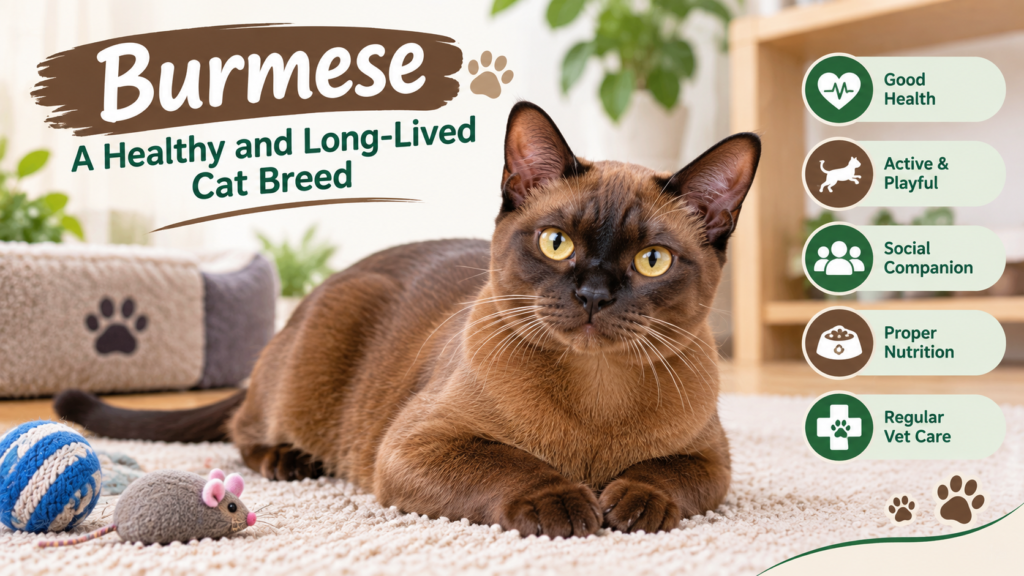
Burmese – A Healthy and Long-Lived Cat Breed
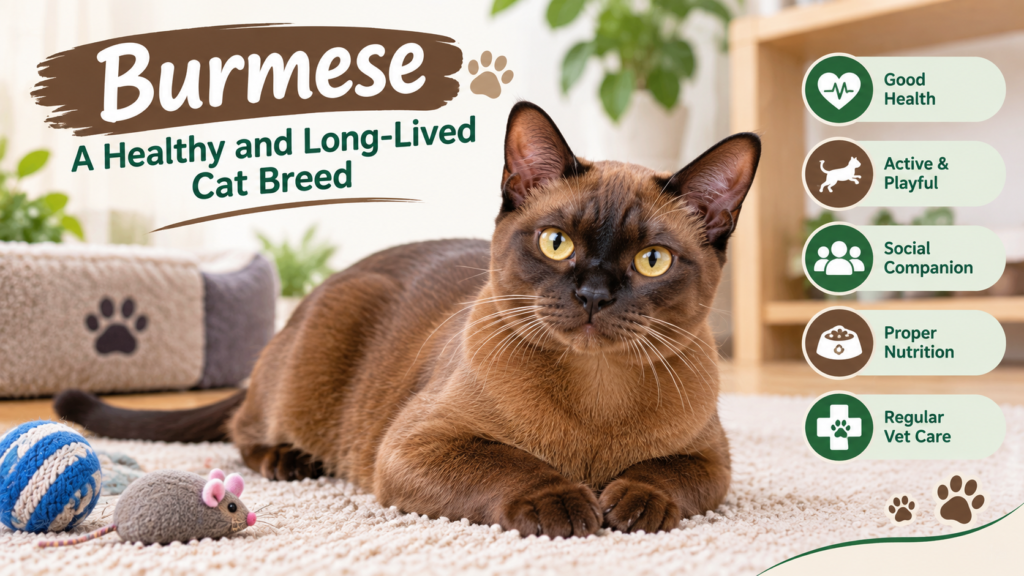
The Burmese is another popular breed known for its affectionate personality and active nature. Burmese cats have a compact, muscular body and a short, easy-care coat.
They are energetic and often enjoy spending time with their owners. Their combination of activity and social interaction makes them engaging companions or cat breeds that live the longest.
Burmese Cat Lifespan
Burmese cats can have a long lifespan when they receive proper nutrition, preventive veterinary care, and a safe living environment.
Individual lifespan can vary considerably, so owners should focus on maintaining good health rather than expecting a specific number of years.
General Health
Like all pedigreed cats, Burmese cats may have certain inherited health concerns. This makes responsible breeding cats particularly important.
Reputable breeders should pay attention to the health history of parent cats and use appropriate veterinary or genetic screening when available or healthiest cat breeds.
Exercise and Nutrition
Burmese cats tend to be active, so regular play can help them maintain healthy muscles and body weight.
A balanced diet with appropriate portions is also important. Overfeeding can lead to obesity, which may contribute to other health problems.
Common Health Considerations
Regular veterinary examinations can help identify potential problems early. Dental health, weight, nutrition, and general physical condition should all be monitored.
Russian Blue – One of the Healthiest Cat Breeds
The Russian Blue is admired for its silvery-blue coat, bright green eyes, and calm but intelligent personality. It is also often included among the healthiest cat breeds because of its generally robust nature.
Russian Blues are moderately active and can adapt well to indoor living when provided with enough exercise and mental stimulation.
Russian Blue Lifespan
With good care, Russian Blues can enjoy a long life. A nutritious diet, regular exercise, preventive healthcare, and a low-stress environment can all support longevity.
Strong Genetic Traits
No cat breed is completely free from health risks. However, selecting kittens from responsible breeders who prioritize health can be an important part of choosing a healthy Russian Blue.
Responsible breeding programs should consider the health and genetic history of parent cats rather than focusing only on appearance.
Diet and Exercise
Russian Blues generally benefit from a balanced diet and controlled portions. Interactive play can help keep them active and mentally engaged.
Puzzle toys, climbing areas, and regular play sessions are useful ways to enrich their indoor environment.
Preventive Care
Routine veterinary visits can help monitor weight, dental health, vaccination needs, and other aspects of overall health.
American Shorthair – A Hardy and Healthy Cat Breed
The American Shorthair is a sturdy and adaptable breed known for its muscular build and easy-care short coat. It is often considered a practical choice for families looking for a relatively low-maintenance companion.
American Shorthairs can adapt to different household environments and generally enjoy interactive play without requiring extremely demanding exercise or cat breeds that live the longest.
American Shorthair Lifespan
With appropriate care, American Shorthairs can live for many years. Their longevity depends on several factors, including genetics, diet, activity, healthcare, and living conditions.
Physical Characteristics
This breed has a strong, muscular body and a dense short coat. Regular brushing can help remove loose hair and keep the coat in good condition.
Nutrition and Grooming
Portion control is particularly important because indoor cats can become overweight when they receive too much food and too little exercise.
Although their short coat is relatively easy to maintain, regular grooming can still be helpful.
Health Considerations
Routine veterinary care is important for monitoring the cat’s weight and detecting potential health problems early.
Choosing a responsible breeder can also help owners learn about the health history of the kitten’s parents.
Domestic Shorthair – One of the Cat Breeds That Live the Longest
Domestic Shorthair cats are not a single standardized breed. Instead, the term is commonly used for short-haired cats with mixed or varied ancestry.
Their diverse genetic backgrounds can sometimes provide advantages compared with narrowly bred populations, although individual health can vary greatly.
Domestic Shorthair Lifespan
Many Domestic Shorthair cats can live long and healthy lives when they receive proper care. Their lifespan depends on genetics, nutrition, lifestyle, preventive healthcare, and whether they live indoors or outdoors.
Genetic Diversity
Genetic diversity may reduce the concentration of certain inherited problems, but it does not make every Domestic Shorthair automatically healthier.
Each cat should still receive regular veterinary care and appropriate preventive treatment.
Health Advantages
Domestic Shorthairs can have fewer breed-specific concerns simply because they do not belong to a narrowly defined pedigree breed. However, they can still develop common feline health problems.
Daily Care
Providing balanced food, fresh water, regular exercise, enrichment, dental care, and routine checkups can help support a Domestic Shorthair’s long-term health.
Keeping cats indoors or providing a secure outdoor environment can also reduce certain risks associated with traffic, fights, infectious diseases, and other hazards.
Balinese – A Long-Lived and Healthy Cat Breed
The Balinese is closely related to the Siamese and is known for its elegant body, pointed coloring, blue eyes, and silky coat.
Despite its graceful appearance, the Balinese is an active and intelligent cat that enjoys playing and interacting with people.
Balinese Lifespan
The Balinese can have a long lifespan when provided with appropriate nutrition, healthcare, exercise, and a safe environment.
As with any breed, individual genetics play an important role in determining overall health and longevity.
Personality
Balinese cats are often intelligent, social, affectionate, and energetic. They usually enjoy human interaction and may become bored without enough attention.
Exercise Needs
Daily play is useful for keeping a Balinese physically active. Wand toys, climbing trees, puzzle toys, and interactive games can provide both exercise and mental stimulation.
Health and Grooming
Their silky coat generally does not require extremely intensive grooming, but regular brushing can help reduce loose hair and keep the coat looking healthy.
Routine veterinary visits are also important for monitoring their general health or healthiest cat breeds.
Japanese Bobtail – One of the Healthiest Cat Breeds
The Japanese Bobtail is famous for its distinctive short tail and energetic personality. It is an ancient-looking breed with a unique appearance and an active temperament.
Japanese Bobtails are often playful, curious, and social. They can make excellent companions for households that can provide plenty of interaction or cat breeds that live the longest.
Japanese Bobtail Lifespan
A well-cared-for Japanese Bobtail can enjoy a long and active life. Good nutrition, exercise, preventive healthcare, and responsible breeding can all contribute to its well-being.
Unique Characteristics
The most recognizable feature of this breed is its naturally short, pom-pom-like tail. Individual tails can vary significantly in shape and length.
The breed also tends to have an athletic body and enjoys movement and exploration.
Activity Level
Japanese Bobtails are active cats that often enjoy games and interactive toys. Providing opportunities for climbing and playing can help them stay physically fit.
General Health
Although the breed is generally considered hardy, no cat is completely protected from disease. Regular veterinary care is essential for detecting problems early and maintaining good health.
Bombay – A Healthy Cat Breed With a Long Lifespan
The Bombay is a distinctive cat known for its sleek black coat, copper or golden eyes, and muscular body. These cats are generally social, affectionate, and playful.
Their short coat is relatively easy to maintain, making them a convenient choice for owners who prefer a cat that does not require extensive grooming or healthiest cat breeds.
Bombay Cat Lifespan
With appropriate care, Bombay cats can enjoy a long and active life. Providing nutritious food, regular exercise, preventive healthcare, and a safe home can support their overall well-being.
Personality and Activity
Bombay cats are often friendly and people-oriented. Many enjoy interactive games and spending time with their families.
Daily play can help them maintain healthy body weight and provide mental stimulation.
Exercise Requirements
Interactive toys, scratching posts, climbing trees, and regular play sessions can help keep a Bombay active.
Because indoor cats can sometimes gain excess weight, owners should combine appropriate portions with regular physical activity.
Health Considerations
Like other pedigreed cats, Bombay cats may have certain inherited or breed-associated health concerns. Responsible breeders should pay attention to the health history of parent cats.
Regular veterinary examinations can also help detect potential problems early.
Cornish Rex – An Active and Healthy Cat Breed
The Cornish Rex is famous for its unusual curly or wavy coat, slender body, large ears, and energetic personality. It is one of the most distinctive members of the Rex cat group.
Cornish Rex cats are generally highly active and enjoy climbing, jumping, running, and playing.
Cornish Rex Lifespan
A Cornish Rex can potentially enjoy a long life when given proper nutrition, veterinary care, exercise, and a safe environment.
As with every breed, individual genetics can affect health and longevity.
Unique Curly Coat
The Cornish Rex has a fine, curly coat that feels soft to the touch. Its unusual coat means grooming needs can differ from those of cats with traditional fur.
Owners should handle the coat gently and monitor the skin for irritation or other changes.
Activity and Exercise
These cats are energetic and often need plenty of opportunities to play. Cat trees, interactive toys, tunnels, and climbing areas can help satisfy their natural curiosity.
Regular play is also useful for maintaining a healthy body condition.
Health Care
Responsible breeding and appropriate health screening are important when choosing a Cornish Rex kitten.
Owners should also provide routine veterinary care, a balanced diet, dental care, and appropriate preventive treatments.
Maine Coon – One of the Long-Lived Giant Cat Breeds
The Maine Coon is one of the largest and most famous domestic cat breeds. Its impressive size, long coat, tufted ears, and bushy tail make it instantly recognizable.
Although Maine Coons are considered giant cats breeds, their size does not automatically mean they have poor health. With appropriate care, they can be wonderful and affectionate family companions or healthiest cat breeds.
Maine Coon Lifespan
Maine Coon lifespan can vary between individual cats. Genetics, nutrition, weight, exercise, and veterinary care all play important roles.
Owners should focus on maintaining good overall health rather than expecting a specific lifespan.
Size and Health
Because Maine Coons are large cats, maintaining an appropriate body weight is particularly important. Excess weight can put additional stress on joints and other parts of the body.
Regular monitoring by a veterinarian can help identify potential concerns.
Nutrition and Weight Management
Maine Coons need an appropriately balanced diet that provides sufficient nutrition without excessive calories.
Portion control is important, especially for cats that spend most of their time indoors.
Health Screening
People interested in purchasing a Maine Coon kitten should look for responsible breeders who prioritize health.
Health screening of parent cats can help breeders identify certain inherited risks and make more informed breeding decisions.
Turkish Angora – One of the Healthiest Cat Breeds
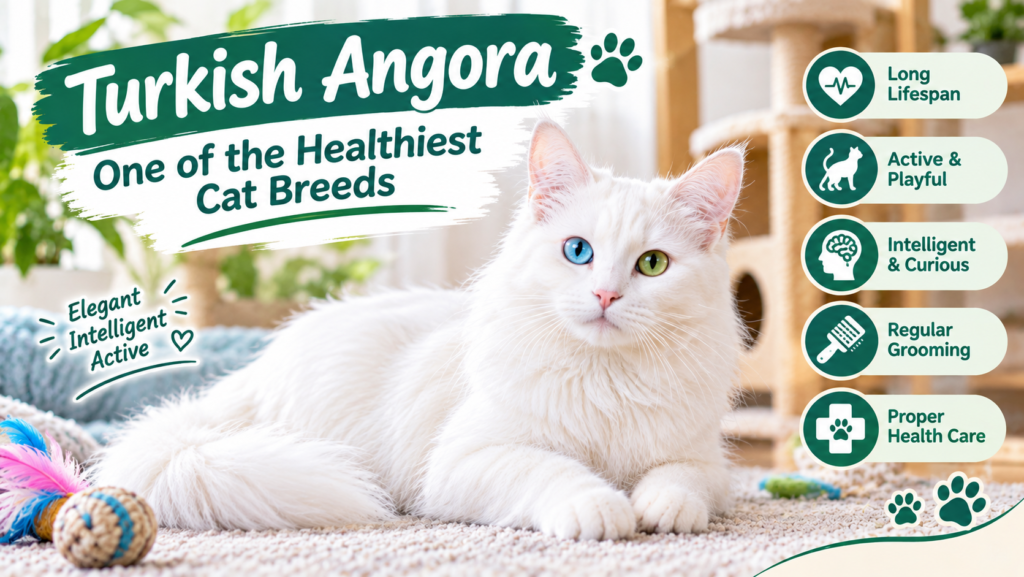
The Turkish Angora is an elegant and athletic cat known for its silky coat, graceful body, and intelligent personality.
Although many people associate the breed with white fur, Turkish Angoras can appear in several coat colors and patterns.
Turkish Angora Lifespan
Turkish Angoras can potentially live for many years when they receive proper nutrition, veterinary care, exercise, and a safe home environment.
As with other healthiest cat breeds, longevity depends on more than breed alone.
Personality and Activity
Turkish Angoras are often intelligent, curious, active, and playful. They usually benefit from regular interaction and mental stimulation.
Providing climbing areas and interactive toys can help keep them entertained.
Grooming Requirements
Their silky coat can benefit from regular brushing. Grooming also provides an opportunity for owners to notice changes in the skin or coat.
Routine grooming should be gentle and comfortable for the cat.
Common Health Considerations
Responsible breeding can help reduce the risk of passing certain inherited conditions from parents to kittens.
Owners should also maintain regular veterinary appointments and follow professional recommendations for preventive care.
Ragdoll – A Healthy Breed With a Good Lifespan
The Ragdoll is a popular breed known for its blue eyes, pointed coat pattern, large size, and gentle personality.
Ragdolls are often relaxed and affectionate, making them popular with families and individuals looking for a calm companion or healthiest cat breeds.
Ragdoll Lifespan
With good nutrition, regular veterinary care, appropriate exercise, and responsible breeding, Ragdolls can enjoy a long and healthy life.
Individual lifespan can vary, so maintaining good health throughout every stage of life is more important than focusing on a particular age.
Gentle Temperament
Ragdolls are generally known for their calm and affectionate nature. Many enjoy staying close to their owners and participating in household activities.
Although they can be relaxed, they still need regular play and exercise.
Weight Management
Because Ragdolls are relatively large cats, owners should pay attention to body condition and weight.
A balanced diet and regular activity can help reduce the risk of obesity.
Veterinary Care
Regular veterinary examinations are important for monitoring the cat’s general health. Dental care, vaccinations, parasite prevention, and other preventive measures should be provided according to veterinary recommendations.
What Makes the Healthiest Cat Breeds Live Longer?
A cat’s breed is only one part of the longevity equation. Even the healthiest cat breeds need proper care to reach their full potential.
Genetics and Inherited Health
Genetics can influence a cat’s susceptibility to certain diseases. This is why responsible breeding is important when purchasing a pedigreed kitten.
Breeders should prioritize healthy parent cats and consider relevant health screening before producing kittens.
Diet and Nutrition
A balanced diet is essential for cats of every breed. Cats need appropriate nutrients and calories based on their age, size, activity level, and individual needs.
Overfeeding should be avoided because excess weight can place additional stress on a cat’s body.
Exercise and Mental Stimulation
Regular activity helps cats maintain healthy muscles and body weight. Mental stimulation is also important, particularly for intelligent and active breeds.
Interactive toys, scratching posts, climbing structures, and playtime can make an indoor environment more enriching.
Regular Veterinary Care
Routine veterinary examinations can help detect health problems before they become more serious.
Preventive care may include vaccinations, parasite prevention, dental care, weight monitoring, and other recommendations based on the individual cat.
Conclusion
The healthiest cat breeds can be excellent companions for people who want an active and potentially long-lived pet. Siamese, Burmese, Russian Blue, American Shorthair, Domestic Shorthair, Balinese, and Japanese Bobtail are all worth considering for their generally strong characteristics and potential for longevity.
However, breed alone does not determine how long a cat will live.
What Makes the Healthiest Cat Breeds Live Longer?
The breed of a cat is only one factor that influences longevity. Even the healthiest cat breeds need proper care to remain healthy.
Genetics and Inherited Health
Genetics can influence a cat’s susceptibility to certain diseases. This is one reason responsible breeding is so important.
Breeders should select parent cats carefully and consider their health history, temperament, pedigree, and relevant genetic testing.
Diet and Nutrition
A balanced and age-appropriate diet is essential for feline health.
Cats should receive appropriate portions rather than unlimited food. Maintaining a healthy body weight can reduce the risk of obesity-related problems.
Exercise and Mental Stimulation
Physical activity helps cats maintain muscle tone and a healthy body condition.
Mental stimulation is equally important. Interactive toys, puzzle feeders, scratching posts, climbing structures, and regular play can provide enrichment.
Regular Veterinary Care
Routine veterinary examinations allow potential health problems to be identified early.
Preventive care can include vaccinations, dental examinations, parasite control, weight monitoring, and other treatments recommended by a veterinarian.
Breeding Cats: How Responsible Breeding Can Support Health
Responsible breeding cats practices can play an important role in improving the health of future generations.
Breeders should avoid selecting cats solely because they have desirable physical features. Health and temperament should be important parts of the selection process.
Health Testing Before Breeding
Before breeding cats, responsible breeders should work with veterinarians to assess the health of potential parents.
Depending on the breed, appropriate health or genetic screening may help identify inherited risks or healthiest cat breeds.
Choosing Healthy Parent Cats
Healthy parent cats are an important foundation of responsible breeding.
Breeders should consider:
Overall physical health
Genetic history
Temperament
Age and maturity
Breed-specific health risks
Appropriate veterinary screening
Genetic Diversity
Maintaining appropriate genetic diversity can be important for reducing the concentration of harmful inherited traits.
Responsible breeders should understand pedigrees and avoid breeding practices that unnecessarily increase genetic risks.
Cat Breeding and Genetic Health
Responsible cat breeding is very different from breeding primarily for appearance or profit.
Poor breeding practices can increase the risk of inherited conditions, particularly when breeders repeatedly use closely related cats or fail to screen breeding animals.
Why Responsible Cat Breeding Matters
Good breeding programs aim to produce healthy kittens with sound temperaments while preserving the desirable characteristics of the breed.
Health should always be considered alongside appearance.
Choosing a Responsible Breeder
If you are looking for one of the healthiest cat breeds, ask a breeder about:
The health history of the parents
Veterinary examinations
Relevant genetic testing
Vaccination and preventive care
How kittens are socialized
The breeder’s approach to genetic health
A responsible breeder should be willing to discuss health concerns honestly rather than claiming that a breed is completely free from health problems.
How to Help Your Cat Live a Longer Life
Regardless of breed, owners can take several practical steps to support their cat’s health.
Provide a Balanced Diet
Feed your cat an appropriate, nutritionally balanced diet. Portion sizes should be adjusted according to age, activity level, body condition, and veterinary guidance.
Maintain a Healthy Weight
Obesity can negatively affect a cat’s overall health. Monitor body condition and avoid excessive treats or overfeeding.
Encourage Daily Exercise
Regular play helps cats stay active. Wand toys, balls, tunnels, scratching posts, and climbing structures can make exercise more enjoyable.
Schedule Regular Veterinary Visits
Routine checkups can help detect health problems early and keep preventive care up to date.
Provide Dental Care
Dental health is an important part of overall feline health. Regular veterinary dental examinations and appropriate home care can help maintain healthy teeth and gums.
Create a Safe Environment
A safe indoor environment can protect cats from many outdoor hazards. Secure windows, provide safe resting spaces, and keep potentially harmful substances away from pets.
FAQs About the Healthiest Cat Breeds
What are the healthiest cat breeds?
There is no single breed that is healthiest for every situation. Siamese, Burmese, Russian Blue, American Shorthair, Domestic Shorthair, Balinese, Japanese Bobtail, Bombay, Cornish Rex, Maine Coon, Turkish Angora, and Ragdoll can all be considered when looking for healthy and potentially long-lived cats.
Which cat breeds live the longest?
Several breeds can have relatively long lifespans, including Siamese, Burmese, Russian Blue, and other breeds discussed in this guide. However, individual genetics and quality of care are major factors.
What are the cat breeds that live the longest?
The cat breeds that live the longest can vary depending on the individual cat and available data. Siamese and Burmese cats are often associated with longevity, but proper nutrition, preventive healthcare, and genetics are equally important.
Can mixed-breed cats be healthier than purebred cats?
Mixed-breed cats may have greater genetic diversity, which can sometimes reduce the concentration of certain inherited conditions. However, mixed-breed cats can still develop common feline diseases.
Does responsible cat breeding improve cat health?
Responsible cat breeding can help reduce the risk of passing certain inherited conditions to kittens. Health testing and careful selection of parent cats are important parts of a responsible breeding program.
How long can a healthy cat live?
A cat’s lifespan varies considerably. Genetics, breed, nutrition, lifestyle, veterinary care, and environmental safety can all influence longevity.
What factors affect a cat’s lifespan?
Major factors include genetics, diet, body weight, exercise, preventive veterinary care, dental health, environmental safety, and early detection of disease.
How can I help my cat live longer?
Provide a balanced diet, maintain a healthy weight, encourage exercise, schedule routine veterinary visits, provide dental care, and create a safe and enriching environment.
1 Comment