

 By
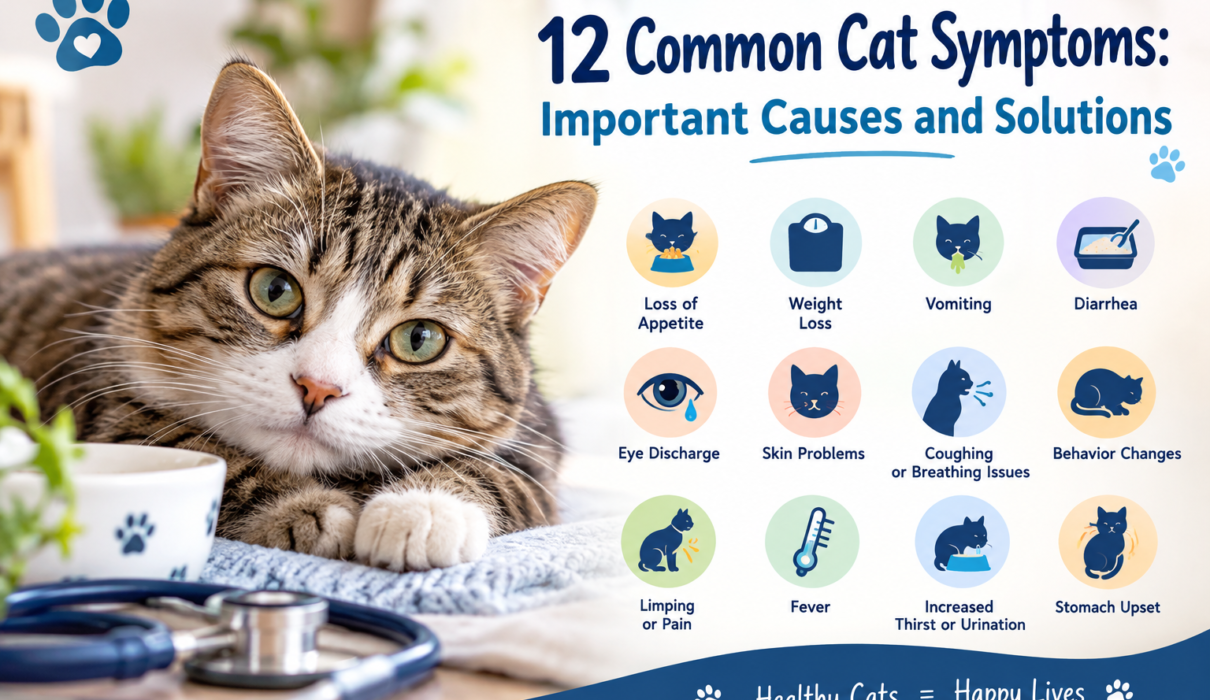
12 Common Cat Symptoms: Important Causes and Solutions
Cats are very good at hiding signs of illness, which is why cat owners should pay attention to even small changes in their behavior, eating habits, breathing, and daily routine. Some Cat Symptoms may be minor and temporary, while others can indicate a condition that needs veterinary attention.
Common problems such as Sneezing, Limping, cat drooling, and Cats heavy breathing can happen for different reasons. Understanding the possible causes can help you recognize when your cat needs extra care.
In this first part, we will discuss six common Cat Symptoms, including sneezing, drooling, heavy breathing, limping, vomiting, and loss of appetite.
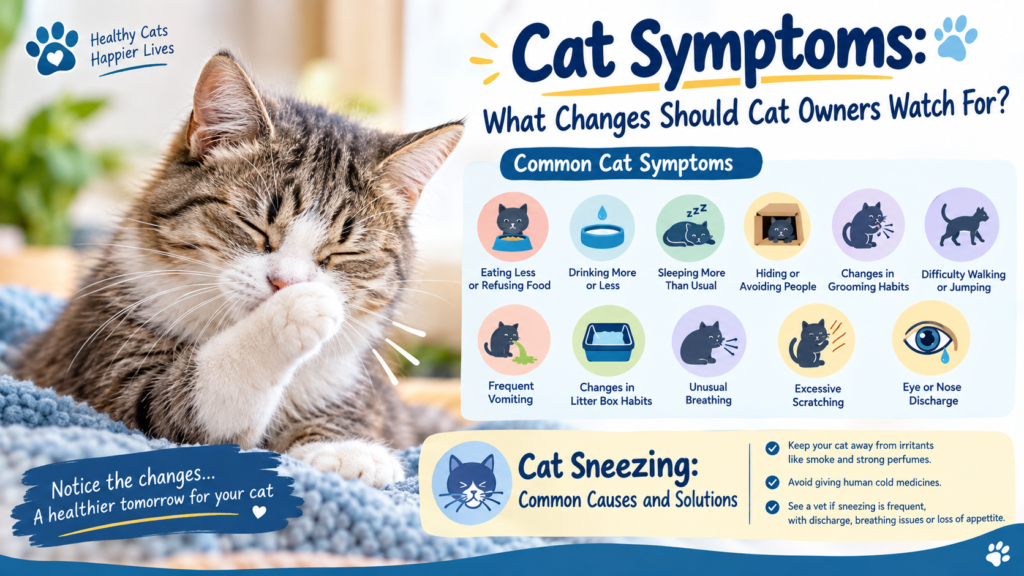
Cat Symptoms: What Changes Should Cat Owners Watch For?
One of the most important parts of caring for a cat is knowing what is normal for your individual pet. A sudden change in routine can sometimes be an early sign of a health problem.
Common Cat Symptoms to watch for include:
- Eating less or refusing food
- Drinking much more or less than usual
- Sleeping significantly more than normal
- Hiding or avoiding people
- Changes in grooming habits
- Difficulty walking or jumping
- Frequent vomiting
- Changes in litter box habits
- Unusual breathing
- Excessive scratching
- Discharge from the eyes or nose
A single mild symptom does not always mean that your cat is seriously ill. However, symptoms that persist, become worse, or occur together should receive more attention.
For example, occasional sneezing may be caused by dust, while repeated sneezing combined with nasal discharge and poor appetite could indicate an illness.
Cat Sneezing: Common Causes and Solutions
Sneezing is one of the most common symptoms that cat owners notice. A cat may sneeze occasionally because of dust, perfume, cleaning products, smoke, or other particles that irritate the nose.
However, frequent Sneezing can have other causes.
Common Causes of Cat Sneezing
Some possible causes include:
- Dust or airborne particles
- Strong fragrances
- Household cleaning products
- Allergies
- Nasal irritation
- Upper respiratory infections
- Foreign material inside the nose
- Dental problems that affect the nasal area
Upper respiratory infections are a common reason cats may sneeze repeatedly. Affected cats may also have watery eyes, nasal discharge, congestion, reduced appetite, or lower energy.
When Is Sneezing Concerning?
Occasional sneezing without other symptoms may not be a major concern. However, you should pay closer attention if your cat is sneezing frequently or develops additional signs.
Contact a veterinarian if Sneezing is accompanied by:
- Thick nasal discharge
- Eye discharge
- Difficulty breathing
- Fever
- Loss of appetite
- Severe tiredness
- Persistent symptoms
Keep your cat away from smoke, strong perfumes, and other obvious irritants. Avoid giving human cold medicines because many human medications can be dangerous for cats.
Cat Drooling: Why Is My Cat Drooling?
A small amount of saliva can sometimes be normal, especially when a cat is relaxed or enjoying something. However, excessive cat drooling can be a sign that something is wrong.
There are several possible causes of increased saliva production.
Dental Problems
Dental disease is an important cause of cat drooling. Cats can develop plaque, tartar, gum inflammation, and painful dental conditions.
A cat with dental pain may also:
- Avoid hard food
- Chew on one side
- Have bad breath
- Paw at the mouth
- Drop food while eating
- Become less interested in food
Regular dental care and veterinary dental examinations can help identify problems early.
Mouth Injuries or Foreign Objects
A small injury inside the mouth or something stuck between the teeth can also cause excessive saliva. Cats may drool because swallowing becomes uncomfortable.
If your cat suddenly begins drooling heavily, check for other signs such as pawing at the mouth or difficulty eating. Do not force objects out of the mouth if they appear deeply stuck.
Nausea or Poisonous Substances
Nausea can cause increased salivation. Exposure to certain poisonous substances can also result in drooling, vomiting, weakness, or unusual behavior.
If you suspect that your cat has eaten or contacted a potentially toxic substance, seek veterinary help promptly rather than waiting for symptoms to become severe.
Cats Heavy Breathing: Causes and Warning Signs
Normal cats generally breathe quietly and comfortably. Cats heavy breathing can sometimes occur temporarily after exercise, excitement, or exposure to heat.
However, heavy or difficult breathing can also be an important warning sign.
Possible Causes of Heavy Breathing
Some possible causes include:
- Exercise
- Heat or overheating
- Stress or fear
- Respiratory infections
- Asthma
- Heart-related conditions
- Lung problems
- Pain or injury
The circumstances surrounding the breathing change are important. A cat that briefly breathes faster after running may return to normal after resting.
On the other hand, breathing that remains rapid, difficult, or unusual while the cat is resting deserves veterinary attention.
Open-Mouth Breathing in Cats
Cats generally do not breathe through an open mouth like dogs commonly do. Open-mouth breathing, especially when the cat is resting, can indicate significant breathing difficulty.
Other warning signs can include:
- Rapid breathing
- Noisy breathing
- Extended neck while breathing
- Blue or pale gums
- Extreme weakness
- Collapse
- Difficulty getting comfortable
If your cat appears to be struggling to breathe, treat it as an urgent situation and seek veterinary care.
Do not force your cat to eat, drink, or move around unnecessarily when breathing is difficult. Keep the environment calm while arranging veterinary assistance.
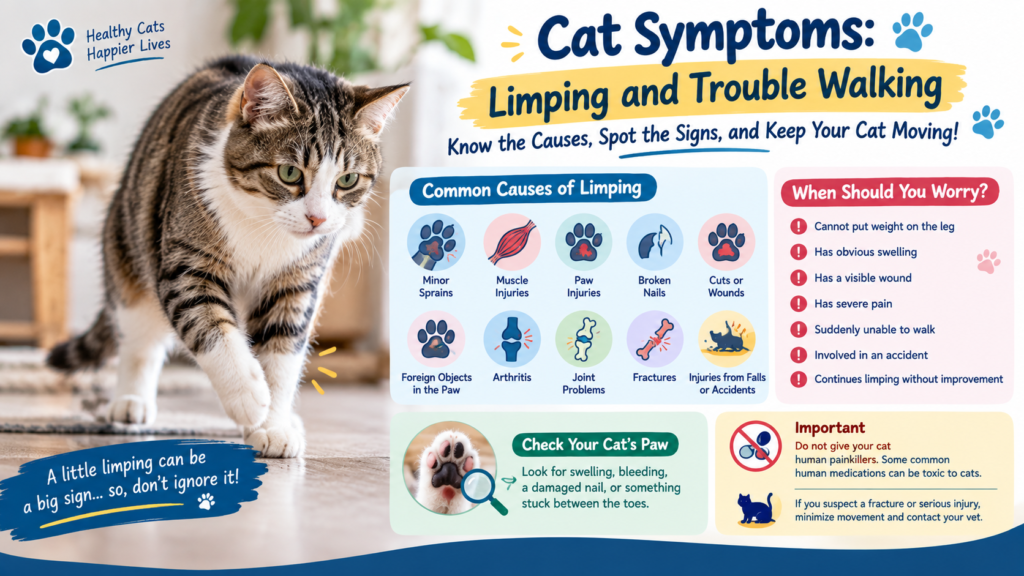
Cat Symptoms: Limping and Trouble Walking
Limping is another common symptom that can have many different causes. Cats may limp after jumping from a high surface, getting into a fight, or injuring a paw.
Sometimes the injury is minor, but limping can also be caused by a more serious problem.
Common Causes of Limping
Possible causes include:
- Minor sprains
- Muscle injuries
- Paw injuries
- Broken nails
- Cuts or wounds
- Foreign objects in the paw
- Arthritis
- Joint problems
- Fractures
- Injuries from falls or accidents
Check your cat’s paw carefully if they allow you to do so safely. Look for swelling, bleeding, a damaged nail, or something stuck between the toes.
When Should You Worry About Limping?
Mild Limping that quickly improves may not require emergency care. However, veterinary attention is important if your cat:
- Cannot put weight on the leg
- Has obvious swelling
- Has a visible wound
- Has severe pain
- Suddenly becomes unable to walk
- Has been involved in an accident
- Continues limping without improvement
Do not give your cat human painkillers. Some common human medications can be toxic to cats.
If you suspect a fracture or serious injury, minimize movement and contact a veterinarian.
Cat Symptoms: Vomiting and Loss of Appetite
Vomiting is another symptom that cat owners commonly encounter. Cats may occasionally vomit hairballs or something that has irritated their stomach. However, repeated vomiting should not simply be ignored.
Possible Causes of Vomiting
Some causes include:
- Hairballs
- Eating too quickly
- Sudden diet changes
- Food intolerance
- Parasites
- Gastrointestinal problems
- Infections
- Ingestion of inappropriate objects
- Exposure to toxic substances
The appearance and frequency of vomit can provide useful information for a veterinarian.
Loss of Appetite
A temporary decrease in appetite may happen because of stress or a change in food. But cats that refuse food for an extended period can develop serious health problems.
Loss of appetite becomes more concerning when it occurs with othe such as:
- Repeated vomiting
- Diarrhea
- Extreme tiredness
- Weight loss
- Drooling
- Difficulty breathing
- Changes in urination
Make sure your cat has access to fresh water and a comfortable environment. If your cat is repeatedly vomiting or refuses food, contact your veterinarian for advice.
Cat Symptoms: Coughing and Wheezing
Coughing is not always caused by a hairball. Cats can cough when their airways become irritated or when they have an underlying respiratory problem.
Common Causes of Coughing
Possible causes include:
- Dust or smoke
- Airborne irritants
- Respiratory infections
- Feline asthma
- Allergies
- Parasites
- Lung problems
- Foreign material in the airway
A cat with asthma may experience coughing, wheezing, rapid breathing, or difficulty breathing. Some cats may crouch with their neck extended when trying to breathe more comfortably.
Coughing vs. Hairballs
Many cat owners assume that every coughing episode means their cat is trying to produce a hairball. However, coughing and vomiting are different actions.
If your cat repeatedly coughs without producing a hairball, the symptom should not simply be ignored.
Contact your veterinarian if coughing:
- Happens frequently
- Gets worse over time
- Is accompanied by wheezing
- Occurs with breathing difficulty
- Is accompanied by weakness or poor appetite
Keeping your home free from smoke, strong fragrances, and excessive dust can help reduce respiratory irritation.
Cat Symptoms: Lethargy and Unusual Tiredness
Cats naturally sleep a lot, so it can sometimes be difficult to determine whether a cat is simply resting or experiencing lethargy.
The most useful comparison is your cat’s normal behavior.
A normally playful cat that suddenly spends most of the day hiding or sleeping may be showing an important change.
Possible Causes of Lethargy
Lethargy can occur because of:
- Stress
- Heat
- Pain
- Infection
- Fever
- Dehydration
- Digestive problems
- Injuries
- Other underlying health conditions
Pay attention to other occur at the same time.
For example, lethargy combined with vomiting, diarrhea, loss of appetite, or breathing problems is more concerning than temporary tiredness after an active day.
If your cat remains unusually tired or shows several symptoms together, contact your veterinarian for advice.
Cat Symptoms: Excessive Scratching and Hair Loss
Occasional scratching is normal. Cats groom themselves regularly and may scratch because of a temporary itch.
However, frequent scratching, excessive licking, or noticeable hair loss can indicate a skin problem.
Common Causes of Excessive Scratching
Possible causes include:
- Fleas
- Mites
- Other parasites
- Allergies
- Skin infections
- Environmental irritation
- Food-related allergies
- Stress
Fleas can cause significant itching, even when you do not immediately see the insects. Some cats are particularly sensitive to flea bites and may develop irritated skin or bald patches.
Signs to Watch For
Look for:
- Red skin
- Scabs
- Bald patches
- Excessive licking
- Frequent biting at the skin
- Small dark particles in the fur
- Skin irritation
Regular parasite prevention recommended by your veterinarian can help protect your cat. Avoid using random flea or skin products without checking whether they are specifically safe for cats.
Cat Symptoms: Changes in Urination and Litter Box Habits
Changes in litter box behavior can be an important part of recognizing Cat Symptoms.
A cat that suddenly urinates more often, strains in the litter box, or starts urinating outside the box may have an underlying health or behavioral problem.
Common Urinary Warning Signs
Watch for:
- Frequent trips to the litter box
- Straining to urinate
- Small amounts of urine
- Blood in the urine
- Crying while urinating
- Urinating outside the litter box
- Excessive licking around the genital area
Urinary problems can have several causes, including inflammation, urinary tract problems, bladder stones, or other conditions.
Urinary Blockage Is an Emergency
A cat that repeatedly attempts to urinate but produces little or no urine may have a urinary blockage.
This can become life-threatening, particularly in male cats.
If your cat is straining without producing urine, appears extremely uncomfortable, cries in the litter box, or suddenly becomes weak, seek emergency veterinary care.
Do not wait for the problem to resolve on its own.
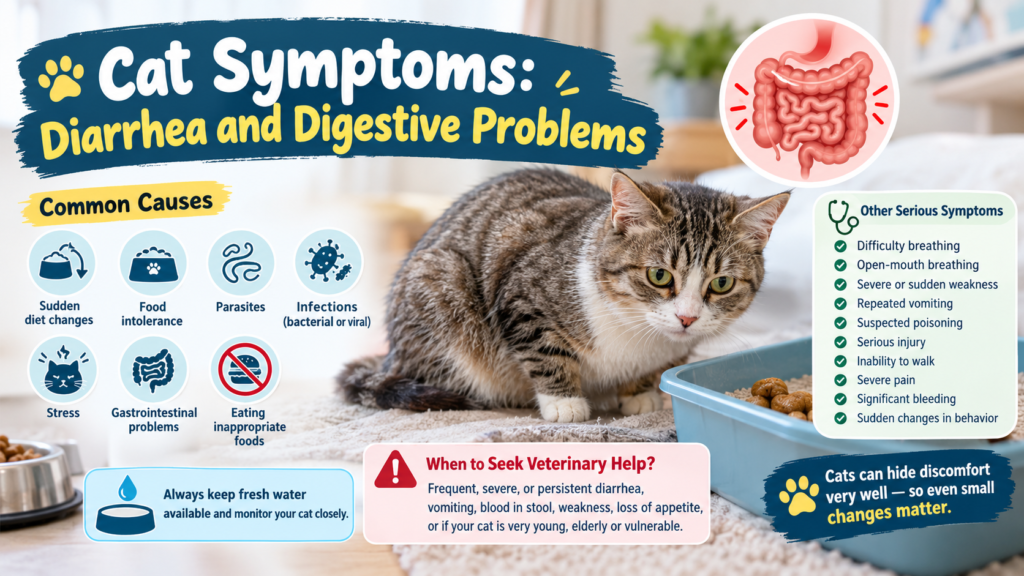
Cat Symptoms: Diarrhea and Digestive Problems
Diarrhea can happen after a sudden food change or when a cat eats something that does not agree with its digestive system.
Occasional mild diarrhea may resolve, but persistent diarrhea can lead to dehydration and may indicate an underlying condition.
Possible Causes of Diarrhea
Common causes include:
- Sudden diet changes
- Food intolerance
- Parasites
- Bacterial or viral infections
- Stress
- Gastrointestinal problems
- Eating inappropriate foods
When Is Diarrhea Concerning?
Pay particular attention when diarrhea is:
- Frequent
- Severe
- Accompanied by vomiting
- Accompanied by blood
- Associated with weakness
- Combined with loss of appetite
- Occurring in a very young, elderly, or otherwise vulnerable cat
Make sure fresh water is always available. If diarrhea continues or your cat develops additional Cat Symptoms, contact a veterinarian.
Do not give human anti-diarrhea medicines unless specifically instructed by a veterinary professional.
Cat Symptoms: When Should You Contact a Veterinarian?
Not every symptom requires an emergency visit, but some situations need prompt professional attention.
Seek veterinary help when your cat has:
- Difficulty breathing
- Open-mouth breathing
- Severe or sudden weakness
- Repeated vomiting
- Suspected poisoning
- Serious injury
- Inability to walk
- Severe pain
- Significant bleeding
- Sudden major changes in behavior
Cats can hide discomfort very well, so changes that seem small can sometimes be meaningful.
Cat Symptoms: Eye and Nose Problems
Eye and nose changes are also important signs that cat owners should monitor.
Healthy cats can occasionally have a small amount of eye or nose moisture, but persistent discharge, redness, swelling, or discomfort can indicate a problem.
Common Eye Symptoms
Watch for:
- Watery eyes
- Redness
- Swelling
- Squinting
- Excessive blinking
- Eye discharge
- Pawing at the eye
- Cloudiness
Eye problems can result from irritation, infection, injury, or other conditions.
Common Nose Symptoms
Nasal problems may include:
- Runny nose
- Repeated Sneezing
- Nasal congestion
- Thick discharge
- Noisy breathing
Eye and nose symptoms sometimes occur together with respiratory infections.
Because eye problems can worsen quickly in some situations, persistent redness, swelling, pain, or changes in the appearance of the eye should be evaluated by a veterinarian.
Cat Symptoms That Require Immediate Veterinary Care
Some Cat Symptoms should be treated as urgent because they can indicate a potentially serious problem.
Seek immediate veterinary care if your cat experiences:
Severe Breathing Difficulty
If your cat is struggling to breathe, breathing with an open mouth, or showing blue, gray, or very pale gums, seek emergency veterinary assistance.
Sudden Inability to Walk
Sudden inability to stand or walk can be associated with serious injury or other urgent conditions.
Suspected Poisoning
If your cat may have swallowed a toxic substance, do not wait for severe symptoms to appear. Contact a veterinarian or emergency animal hospital immediately.
Repeated Vomiting
Repeated vomiting, particularly when combined with weakness, blood, abdominal discomfort, or inability to keep water down, requires professional attention.
Urinary Problems
Straining to urinate without producing urine is an emergency, particularly in male cats.
Severe Injury or Bleeding
Major wounds, accidents, falls, or uncontrolled bleeding require prompt veterinary treatment.
When in doubt about a serious symptom, it is safer to contact a veterinary professional rather than attempting to diagnose the condition at home.
How to Monitor Cat Symptoms at Home
Good observation can help you notice changes before they become severe.
Keep Track of Changes
Make a simple record of:
- When the symptom started
- How often it occurs
- Whether it is getting better or worse
- Eating and drinking habits
- Urination and bowel movements
- Activity level
- Changes in weight
- Other symptoms occurring at the same time
For example, if your cat develops Sneezing, note whether it happens occasionally or several times throughout the day.
If cat drooling occurs, observe whether your cat is also having trouble eating or pawing at its mouth.
If occurs, note which leg is affected and whether your cat can put weight on it.
Take Photos or Videos
Photos and short videos can sometimes help a veterinarian understand what you observed, particularly with unusual breathing, coughing, limping, or movement.
Avoid Human Medicines
Never assume that a medicine safe for humans is automatically safe for cats. Some human medications can be extremely dangerous to cats.
Always speak with a veterinarian before giving medication or supplements.
Preventing Common Cat Symptoms
Not every illness can be prevented, but regular preventive care can reduce some health risks.
Schedule Regular Veterinary Checkups
Routine veterinary examinations can help identify health problems before obvious symptoms develop.
Provide Balanced Nutrition
Feed your cat a complete and balanced diet appropriate for its age and needs. Avoid sudden food changes whenever possible.
Maintain Dental Health
Regular dental care can help reduce the risk of dental disease, which may contribute to problems such as bad breath, difficulty eating, and cat drooling.
Use Parasite Prevention
Flea and parasite prevention can reduce the risk of itching, skin irritation, and certain parasite-related illnesses.
Keep the Environment Safe
Keep harmful chemicals, medications, toxic plants, and other dangerous substances away from cats.
Also minimize exposure to smoke and strong chemical fumes.
Maintain a Healthy Weight
A healthy body weight supports mobility and overall health. Your veterinarian can help determine an appropriate weight and feeding plan for your cat.
FAQ: Common Cat Symptoms
What are the most common Cat Symptoms to watch for?
Common signs include changes in appetite, vomiting, diarrhea, lethargy, Sneezing, coughing, unusual breathing, Limping, excessive scratching, eye discharge, and changes in litter box habits.
When is cat sneezing a serious problem?
Occasional sneezing may result from dust or mild irritation. Frequent Sneezing, especially with nasal discharge, eye problems, poor appetite, or breathing difficulty, should be discussed with a veterinarian.
Why is my cat drooling excessively?
Excessive cat drooling can be associated with dental disease, mouth irritation, nausea, foreign objects, or exposure to certain toxic substances. Sudden or severe drooling should be evaluated by a veterinary professional.
Why are my cats heavy breathing?
Cats heavy breathing can occur temporarily after exercise, stress, or heat. Persistent rapid breathing, open-mouth breathing, or obvious difficulty breathing can be an emergency and requires immediate veterinary attention.
When should I worry about limping?
Mild Limping may occur after a minor injury, but severe pain, inability to put weight on a leg, swelling, wounds, or sudden inability to walk requires veterinary attention.
Can Cat Symptoms disappear without treatment?
Some mild symptoms may resolve on their own, but it is difficult to determine the cause based only on appearance. Persistent, worsening, or multiple symptoms should be discussed with a veterinarian.
Should I take my cat to the vet for unusual behavior?
A sudden and persistent change in behavior can be an important health clue. If your cat hides more than usual, stops eating, becomes unusually tired, or shows other Cat Symptoms, contact your veterinarian.
Conclusion: Understanding Cat Symptoms Early
Understanding common Cat Symptoms can help cat owners notice changes in their pets and respond appropriately. Symptoms such as Sneezing, Limping, cat drooling, and Cats heavy breathing can have different causes, so it is important not to assume that every symptom has the same explanation.
Pay attention to how long a symptom lasts, whether it is getting worse, and whether other signs appear at the same time. Regular veterinary checkups, good nutrition, dental care, parasite prevention, and a safe home environment can also support your cat’s overall health.
Most importantly, serious symptoms such as breathing difficulty, urinary blockage, severe injury, collapse, or suspected poisoning should receive prompt veterinary attention rather than home treatment.