

 By
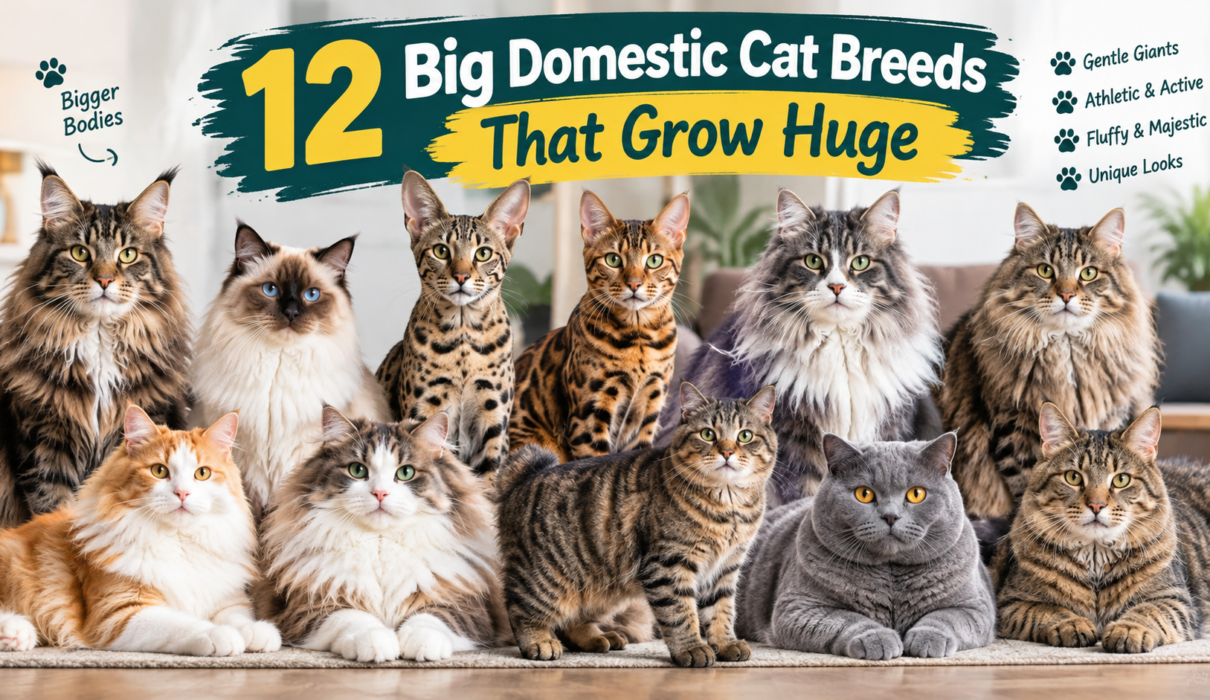
12 Big Domestic Cat Breeds That Grow Huge
If you love cats with impressive size, fluffy coats, and big personalities, there are many big domestic cat breeds worth discovering. Some domestic cats can grow considerably larger than the average house cat, with long bodies, muscular builds, and impressive weights.
Large cats can also have very different personalities. Some are calm and affectionate, while others are highly active, intelligent, and playful. Their size also means owners may need larger litter boxes, sturdy cat trees, appropriate nutrition, and plenty of space.
In this first part, we will explore six impressive large breeds: Maine Coon, Ragdoll, Savannah, Bengal, Norwegian Forest Cat, and Siberian.
What Makes Big Domestic Cat Breeds So Large?
Before looking at individual breeds, it is helpful to understand what makes a cat appear or become exceptionally large.
A cat’s overall size can be influenced by genetics, sex, body structure, muscle mass, and coat. Some cats are particularly long, while others are heavier because of their muscular or stocky bodies.
Male cats are often larger than females, although individual variation can be significant. A healthy large cat should have an appropriate body condition rather than simply being overweight.
The big domestic cat breeds discussed in this guide can differ considerably in height, weight, body length, and appearance.
Maine Coon – One of the Biggest Domestic Cat Breeds
The Maine Coon is widely recognized as one of the largest domestic cat breeds. It combines a long body, substantial bone structure, large paws, and a luxurious coat to create an especially impressive appearance.
Maine Coons can take several years to reach their full size. Their long bodies and flowing coats can make them look even larger than they actually are.
Maine Coon Appearance
The breed is known for:
A long, rectangular body
Large paws
Long, flowing coat
Large ears with furnishings
Long, bushy tail
Prominent muzzle
Their thick coat helps give them a majestic appearance and is one reason they are often included among giant cats breeds.
Maine Coon Personality
Despite their enormous appearance, Maine Coons are often described as friendly and social cats. Many enjoy spending time with their owners without demanding constant attention.
They can be playful, curious, and intelligent. Their gentle nature can make them suitable for households looking for a large but sociable companion.
Maine Coon Care
Their long coat requires regular grooming to reduce tangles and mats. Owners should also provide plenty of opportunities for climbing, playing, and exploring.
Because of their size, sturdy cat furniture and appropriately sized litter boxes are particularly useful.
Ragdoll – A Large and Gentle Domestic Cat Breed
The Ragdoll is another impressive member of the big domestic cat breeds. It has a large body, beautiful semi-long coat, and striking blue eyes.
Ragdolls are particularly popular with families because of their affectionate and relaxed personalities.
Ragdoll Appearance
Ragdolls typically have:
A large body
Broad chest
Long legs
Semi-long fur
Blue eyes
Distinctive pointed coloration
Their soft coat and substantial body give them a luxurious appearance.
Ragdoll Personality
Ragdolls are generally known for being calm, affectionate, and people-oriented. Many enjoy following their owners around the home and relaxing nearby giant cats breeds.
They can be playful but are often less intense than some of the highly active large breeds.
Ragdoll Care
Regular brushing helps keep the coat in good condition. Owners should also pay attention to nutrition and weight management because maintaining a healthy body condition is important for large cats.
Ragdolls benefit from interactive toys, comfortable resting areas, and regular attention from their families.
Savannah – A Tall and Athletic Big Domestic Cat Breed
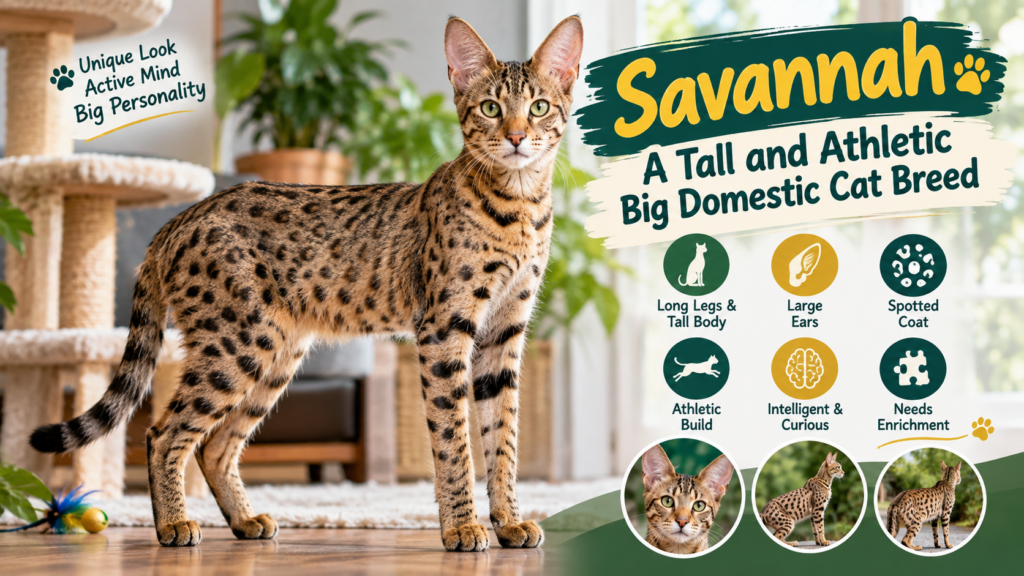
The Savannah is one of the most distinctive large domestic cats. It has an athletic appearance, long legs, large ears, and a spotted coat that reflects its ancestry.
Savannah cats can vary significantly in size depending on their generation and genetics. Some can be especially tall and lean compared with other domestic breeds.
Savannah Appearance
The Savannah is known for:
Long legs
Tall body structure
Large ears
Spotted coat
Long neck
Athletic build
Its unusual proportions can make it appear extremely tall even when it does not have the same body weight as some heavier breeds.
Savannah Personality
Savannah cats can be intelligent, curious, energetic, and highly active. They often require more enrichment than a typical indoor cat.
Interactive toys, climbing structures, puzzle feeders, and daily play can help keep an active Savannah mentally and physically stimulated.
Savannah Care Considerations
Potential owners should research the breed carefully before bringing one home. Different generations can have different characteristics, and local regulations may apply to some hybrid cats.
Their high activity level also means they may not be the best choice for every household.
Bengal – An Athletic Big Domestic Cat Breed
The Bengal is famous for its beautiful spotted or marbled coat and athletic body. When discussing big domestic cat breeds, Bengals are often considered because of their muscular appearance and energetic personalities.
Bengals have ancestry connected to the Asian leopard cat, which contributes to their distinctive appearance. Modern domestic Bengals are bred as companion cats, but they often retain a strong need for activity and enrichment.
Bengal Appearance
Bengals typically have:
Muscular bodies
Athletic proportions
Spotted or marbled coats
Strong legs
Expressive eyes
Short, sleek fur
Their coat can have a striking pattern that gives them a wild-looking appearance.
Bengal Personality
Bengals are often intelligent, active, curious, and playful. They usually enjoy interactive games and activities that allow them to use their natural hunting and problem-solving instincts.
They may become bored without enough stimulation, so owners should provide climbing areas, toys, scratching posts, and interactive play.
Breeds of Bengal Cats and Generations
When researching breeds of Bengal cats, it is important to understand that Bengal is itself a cat breed, while different generations refer to how many generations separate a Bengal from its wild ancestor.
Later-generation Bengals are generally further removed from that wild ancestry and are commonly kept as companion animals.
Norwegian Forest Cat – A Powerful Large Cat Breed
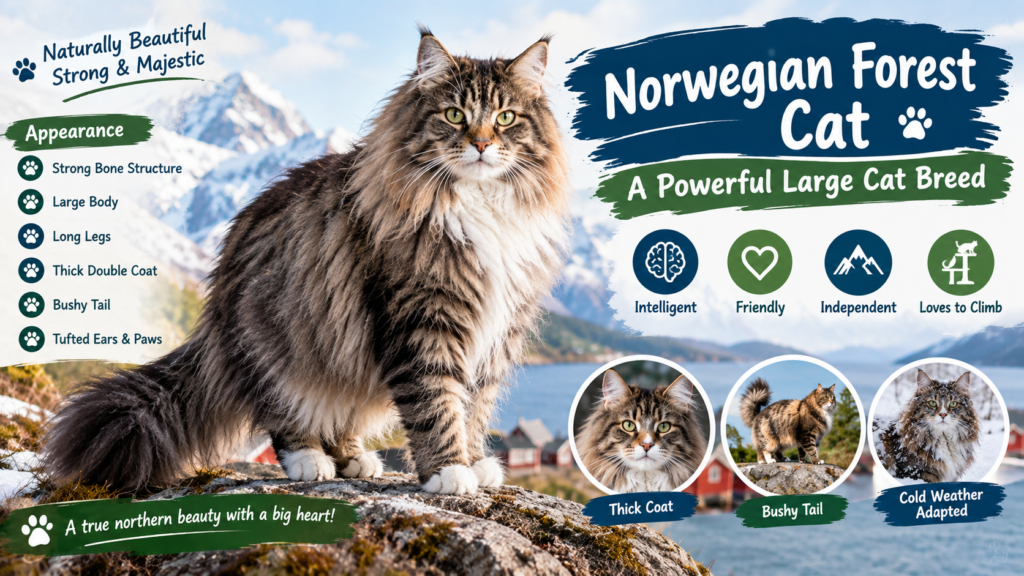
The Norwegian Forest Cat is a naturally impressive breed with a strong body and thick coat. It developed in Norway and is well adapted to cold conditions.
Its large frame, long coat, and bushy tail make it one of the most visually impressive very large cat breeds.
Norwegian Forest Cat Appearance
This breed is known for:
Strong bone structure
Large body
Long legs
Thick double coat
Bushy tail
Tufted ears and paws
Its thick coat can make the cat look considerably larger, particularly during colder months.
Norwegian Forest Cat Personality
Norwegian Forest Cats are generally intelligent, independent, and friendly. They can enjoy human companionship while still maintaining a relatively independent personality.
They often enjoy climbing, so a tall and sturdy cat tree can be a useful addition to their environment.
Norwegian Forest Cat Care
Regular grooming is important because of the breed’s thick coat. Owners should brush the cat regularly, especially during periods of heavier shedding.
A balanced diet, daily activity, and routine veterinary care can help support their overall health.
Siberian – A Strong and Fluffy Big Domestic Cat Breed
The Siberian is another beautiful large breed known for its substantial body and thick coat. Originating from Russia, this breed developed with characteristics suited to a cold climate.
Its dense fur can make it look especially large and fluffy.
Siberian Appearance
Siberians typically have:
Strong, muscular bodies
Medium-to-large size
Thick triple-layered coat
Full tail
Rounded facial features
Large paws
Their dense coat is an important part of their distinctive appearance.
Siberian Personality
Siberians are often described as friendly, intelligent, playful, and adaptable. They can form strong bonds with their families while still enjoying independent exploration.
Many Siberians remain playful well into adulthood.
Siberian Care
Their thick coat benefits from regular brushing, particularly during shedding seasons. Owners should also provide opportunities for climbing, playing, and exploring.
A nutritious diet and regular veterinary examinations are important for maintaining a healthy weight and supporting their active lifestyle.
Comparing the First Six Big Domestic Cat Breeds
The six breeds covered in Part 1 all have impressive qualities, but their sizes and personalities are different.
Maine Coon stands out for its long body, large frame, and luxurious coat. Ragdoll combines substantial size with a calm and affectionate temperament.
Savannah is particularly notable for its height and athletic build, while Bengal is known for its muscular body, striking coat, and high activity level.
Norwegian Forest Cat has a powerful build and thick coat, whereas the Siberian combines a strong body with a dense, fluffy coat.
This variety shows that being a large cat does not mean every breed has the same temperament or care requirements.
Caring for Big Domestic Cat Breeds
Owning one of these large cats requires more than simply providing food and water. Their size and activity levels can affect their everyday needs.
Provide the Right Nutrition
Large cats need a balanced diet appropriate for their age, activity level, and individual health needs. Overfeeding should be avoided because excess weight can put additional stress on the body.
Choose Large Accessories
A large cat may need a bigger litter box, sturdy scratching posts, and strong climbing furniture. Cat beds should also be large enough for the cat to stretch out comfortably.
Encourage Daily Exercise
Play and physical activity are particularly important for active breeds such as Bengals and Savannahs. Interactive toys and climbing structures can provide useful enrichment.
Maintain Regular Grooming
Long-haired and thick-coated breeds generally require more grooming than short-haired cats. Regular brushing can help reduce loose hair and prevent mats.
Schedule Veterinary Checkups
Routine veterinary care helps monitor weight, dental health, and overall wellbeing. Large breeds should not be allowed to become overweight simply because they are naturally bigger cats.
Final Thoughts on Big Domestic Cat Breeds
The first six big domestic cat breeds demonstrate how varied large cats can be. Maine Coons and Ragdolls are known for their impressive size and friendly personalities, while Savannahs and Bengals are more athletic and energetic.
Norwegian Forest Cats and Siberians combine substantial bodies with thick coats that give them an especially majestic appearance.
If you are considering a large cat, remember that size is only one factor. Temperament, grooming, exercise requirements, health considerations, and your home’s available space should all be considered before choosing a breed or giant cats breeds.
Chausie – An Athletic Big Domestic Cat Breed
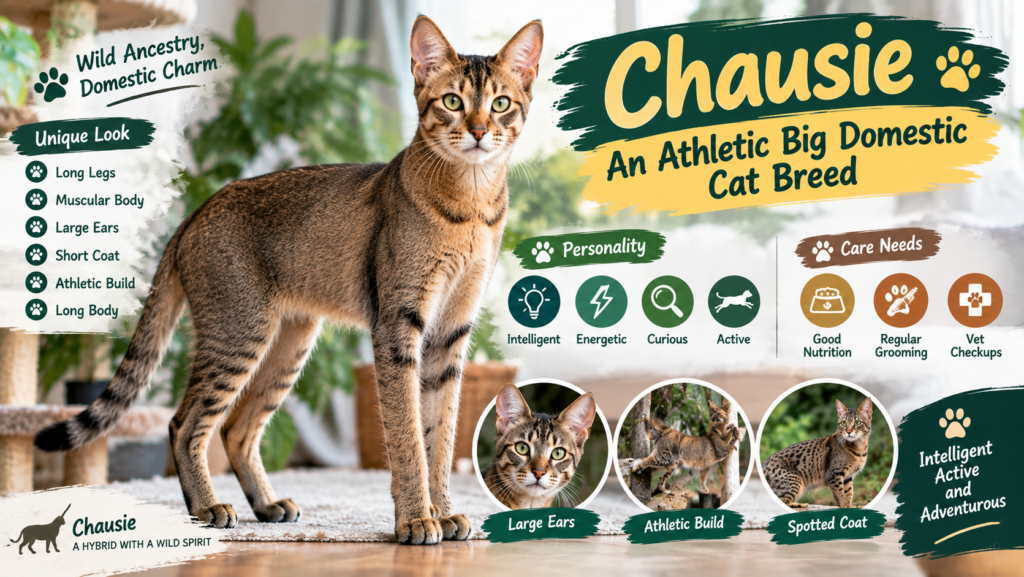
The Chausie is an unusual and athletic domestic cat with a distinctive appearance. It was developed from domestic cats and jungle cat ancestry, giving it a tall, muscular, and athletic body.
Although Chausies can vary in size, their long legs and strong build can make them look particularly impressive.
Chausie Appearance
The Chausie is known for:
Long legs
Muscular body
Deep chest
Large ears
Short coat
Athletic proportions
Long body
Its physical structure gives it a more athletic appearance than many other domestic breeds.
Chausie Personality
Chausies are generally intelligent, energetic, curious, and active. They often enjoy climbing, exploring, and interactive play.
Because they can be highly energetic, they may require more mental stimulation than a calm companion breed.
Puzzle toys, climbing structures, interactive games, and regular play sessions can help keep them engaged.
Chausie Care
Owners should provide plenty of space and enrichment. A nutritious diet, regular grooming, and routine veterinary care are also important.
Anyone considering a Chausie should research the breed carefully because hybrid ancestry can influence characteristics and ownership considerations.
Turkish Van – A Large and Active Big Domestic Cat Breed
The Turkish Van is a distinctive large cat known for its athletic body, semi-long coat, and unusual color pattern. It originated in the Lake Van region of Turkey and has a reputation for being active and intelligent.
This breed can be a great choice for people who appreciate large cats with energetic personalities.
Turkish Van Appearance
Turkish Vans typically have:
A strong body
Long legs
Semi-long coat
Large ears
Full tail
Distinctive color markings
Their body structure gives them a powerful but athletic appearance.
Turkish Van Personality
The Turkish Van is often playful, energetic, curious, and intelligent. Many enjoy climbing and exploring their surroundings.
Some Turkish Vans are also known for their interest in water, which is an unusual trait among cats.
Turkish Van Care
Regular brushing can help keep the coat healthy and reduce loose hair. Because this is an active breed, owners should provide toys, climbing areas, scratching posts, and interactive activities.
A stimulating environment can help prevent boredom and encourage healthy exercise.
Ragamuffin – A Huge and Affectionate Domestic Cat Breed
The Ragamuffin is a large, fluffy cat known for its affectionate personality and beautiful coat. Its substantial body and long, soft fur give it an especially impressive appearance.
For people searching for very large cat breeds with gentle personalities, the Ragamuffin can be an interesting option.
Ragamuffin Appearance
The breed is known for:
Large body
Broad chest
Soft, plush coat
Large expressive eyes
Substantial bone structure
Long, full tail
Its fluffy coat can make the cat look even larger than its actual body size.
Ragamuffin Personality
Ragamuffins are generally known for being affectionate, gentle, and people-oriented. Many enjoy relaxing with their owners and can adapt well to family environments or very large cat breeds.
They can also be playful, making them suitable for households that want both companionship and an interactive pet.
Ragamuffin Grooming
Their semi-long coat needs regular brushing to prevent tangles and mats. Owners should establish a consistent grooming routine from an early age.
Regular nail trimming, dental care, and veterinary examinations are also important parts of responsible cat ownership.
American Bobtail – A Stocky Big Domestic Cat Breed
The American Bobtail is easily recognized by its naturally short tail. It has a strong, muscular body and can come in both short-haired and long-haired varieties.
Its stocky build makes it look powerful even though its overall proportions are different from very tall breeds.
American Bobtail Appearance
American Bobtails can have:
A muscular body
Broad chest
Short tail
Large paws
Strong legs
Short or long coat
Distinctive facial features
The tail length can vary between individual cats.
American Bobtail Personality
American Bobtails are often described as intelligent, playful, adaptable, and affectionate. They can form strong bonds with their families while remaining active and curious.
Their adaptable nature can make them suitable for different types of households.
American Bobtail Care
Grooming requirements depend on whether the cat has a short or long coat. Regular brushing is useful for removing loose hair and keeping the coat healthy or giant cats breeds.
Interactive toys and daily play can help provide the exercise and mental stimulation this breed needs.
British Shorthair – A Heavy and Powerful Large Cat Breed
The British Shorthair is not usually known for being exceptionally tall, but its broad body, heavy bone structure, and dense coat can make it look very large.
It is one of the best examples of how a cat’s overall body type can affect its perceived size.
British Shorthair Appearance
The breed typically has:
A broad chest
Strong body
Short, dense coat
Large head
Round face
Thick legs
Substantial bone structure
Unlike tall breeds such as the Savannah, the British Shorthair looks large because of its compact and powerful build.
British Shorthair Personality
British Shorthairs are generally calm, independent, and easygoing. They often enjoy being around their owners but may not demand constant attention.
Their relaxed personality can make them appealing to people who want a large-looking cat with a calmer lifestyle.
British Shorthair Care
Their short, dense coat is relatively easy to maintain. Regular brushing can help remove loose hair and reduce shedding.
Because this breed can have a stocky body, careful weight management is particularly important. A healthy diet and regular exercise can help prevent excessive weight gain.
Pixiebob – A Muscular Big Domestic Cat Breed
The Pixiebob is another unusual-looking breed that can have a substantial and muscular appearance. It is especially recognized for its short tail, large paws, and sometimes tufted ears.
Its appearance has led some people to compare it visually with wild cats, although it is a domestic breed.
Pixiebob Appearance
Pixiebobs may have:
A muscular body
Short tail
Large paws
Tufted ears
Heavy bone structure
Short or long coat
Strong facial features
These characteristics give the breed a rugged appearance.
Pixiebob Personality
Pixiebobs are often described as intelligent, social, and devoted to their families. Many enjoy interactive activities and can develop strong relationships with their owners.
They can be playful without necessarily being as intensely active as some hybrid breeds.
Pixiebob Care
Grooming requirements depend on coat length. Regular brushing can help keep the coat clean and healthy.
Owners should also provide opportunities for exercise and mental stimulation through toys, climbing structures, and interactive play.
Big Domestic Cat Breeds: Male vs. Female Size
When comparing big domestic cat breeds, it is important to remember that males are often larger than females. However, genetics and individual variation can have a major influence on a cat’s final size.
Two cats of the same breed may have noticeably different body weights and lengths.
It is also important to distinguish between being naturally large and being overweight. A healthy large cat should have an appropriate body condition, not simply a high number on the scale.
Giant Cats Breeds vs. Very Large Cat Breeds
The terms “giant” and “very large” are often used casually when discussing exceptionally big cats. However, there is no single measurement that determines whether every domestic cat should be classified as a giant.
Some cats are especially tall, such as the Savannah. Others are extremely long, such as the Maine Coon. Breeds such as the British Shorthair may appear large because of their broad and heavy body structure.
Therefore, when comparing giant cats breeds, it is useful to consider several factors:
Body weight
Body length
Height
Bone structure
Muscle mass
Coat thickness
This gives a more accurate picture of a breed’s overall size.
Comparing the 12 Big Domestic Cat Breeds
The 12 breeds in this two-part guide demonstrate a wide range of body types.
The Maine Coon is famous for its long body and substantial frame. The Ragdoll combines a large body with a relaxed temperament.
The Savannah is especially tall and athletic, while the Bengal has a muscular body and active personality. Norwegian Forest Cats and Siberians are impressive partly because of their thick coats and strong bodies.
In Part 2, the Chausie and Turkish Van stand out for athletic builds and active personalities. The Ragamuffin has a large, fluffy body, while the American Bobtail has a stocky muscular appearance.
The British Shorthair is broad and heavy rather than particularly tall, and the Pixiebob has a rugged, muscular appearance.
Caring for Very Large Cat Breeds
Owning one of the very large cat breeds can be rewarding, but large cats may have some special everyday requirements.
Provide Appropriate Nutrition
Large cats need a balanced diet that matches their age, activity level, and individual nutritional needs. Avoid overfeeding simply because the cat is naturally large.
Maintaining a healthy weight is essential for supporting mobility and overall wellbeing.
Use Sturdy Cat Furniture
Large cats can put more pressure on cat trees, scratching posts, beds, and other equipment.
Choose sturdy furniture that can safely support the cat’s weight and allow enough room for stretching and climbing.
Provide a Large Litter Box
A large cat may be uncomfortable using a small litter box. Choose a box that gives the cat enough room to enter, turn around, and use it comfortably or big domestic cat breeds.
Encourage Exercise
Daily activity is especially important for energetic breeds. Interactive toys, climbing structures, puzzle feeders, and play sessions can help large cats stay physically active.
Keep Up With Grooming
Long-haired and thick-coated cats often require more grooming than short-haired breeds. Regular brushing can help reduce mats and loose hair big domestic cat breeds .
Schedule Routine Veterinary Care
Regular veterinary examinations can help monitor weight, dental health, mobility, and general wellbeing.
Early attention to changes in appetite, activity, weight, or behavior can help identify potential health concerns.
Are Big Domestic Cat Breeds Good Family Pets?
Many large domestic cats can make wonderful family companions, but the best choice depends on the individual breed and household big domestic cat breeds.
Calmer breeds may be better suited to families looking for a relaxed companion, while highly active breeds may be better for owners who have plenty of time for exercise and enrichment.
Before choosing one of these big domestic cat breeds, consider:
Available living space
Grooming requirements
Activity level
Temperament
Feeding needs
Veterinary care
Compatibility with children and other pets
Choosing a cat based only on size can lead to a poor match. Temperament and lifestyle compatibility are equally important.
FAQs About Big Domestic Cat Breeds
1. What is the biggest domestic cat breed?
The Maine Coon is commonly recognized as one of the largest domestic cat breeds, particularly because of its long body and substantial overall size
2. Which big domestic cat breeds are the heaviest?
Maine Coons, Ragdolls, Ragamuffins, and some other large breeds can reach substantial weights. Individual size varies depending on genetics, sex, diet, and health.
3. What are the best giant cats breeds for families?
Ragdolls, Maine Coons, and Ragamuffins can be appealing to families because they are generally known for friendly and affectionate personalities. However, every cat has its own temperament.
4. Which very large cat breeds are the most affectionate?
Ragdolls and Ragamuffins are particularly known for their affectionate personalities. Maine Coons are also often friendly and social .
5. Are Bengal cats considered big domestic cats?
Bengals can have muscular and athletic bodies, although they are not necessarily among the heaviest domestic breeds. Their appearance can make them seem especially impressive big domestic cat breeds .
6. What are the different breeds of Bengal cats?
Bengal is a specific cat breed rather than a group of separate breeds. Bengals can differ in generation, coat pattern, color, and individual characteristics.
7. Do male big domestic cat breeds grow larger than females?
In many breeds, males tend to be larger than females. However, genetics and individual variation mean this is not true for every cat.
8. How much food does a large domestic cat need?
Food requirements depend on the cat’s age, weight, activity level, health, and the specific food being provided. Follow appropriate feeding guidance and monitor body condition.
9. Do big cats need larger litter boxes?
Yes. A large cat generally benefits from a litter box that provides enough room to enter, turn around, and use comfortably.
10. What is the difference between a large cat and a giant cat?
There is no universal size cutoff separating “large” and “giant” domestic cats. Different breeds can be large because of height, body length, weight, bone structure, or muscle mass.