

 By
Welcoming new kittens into your home can be an exciting experience. Cat pregnancy also brings new responsibilities for every pet owner. You may notice changes in your cat’s body and daily behavior. She might eat more, sleep longer, or seek extra attention. These changes can leave owners wondering what happens next. Understanding pregnancy helps you provide better care throughout this special time.
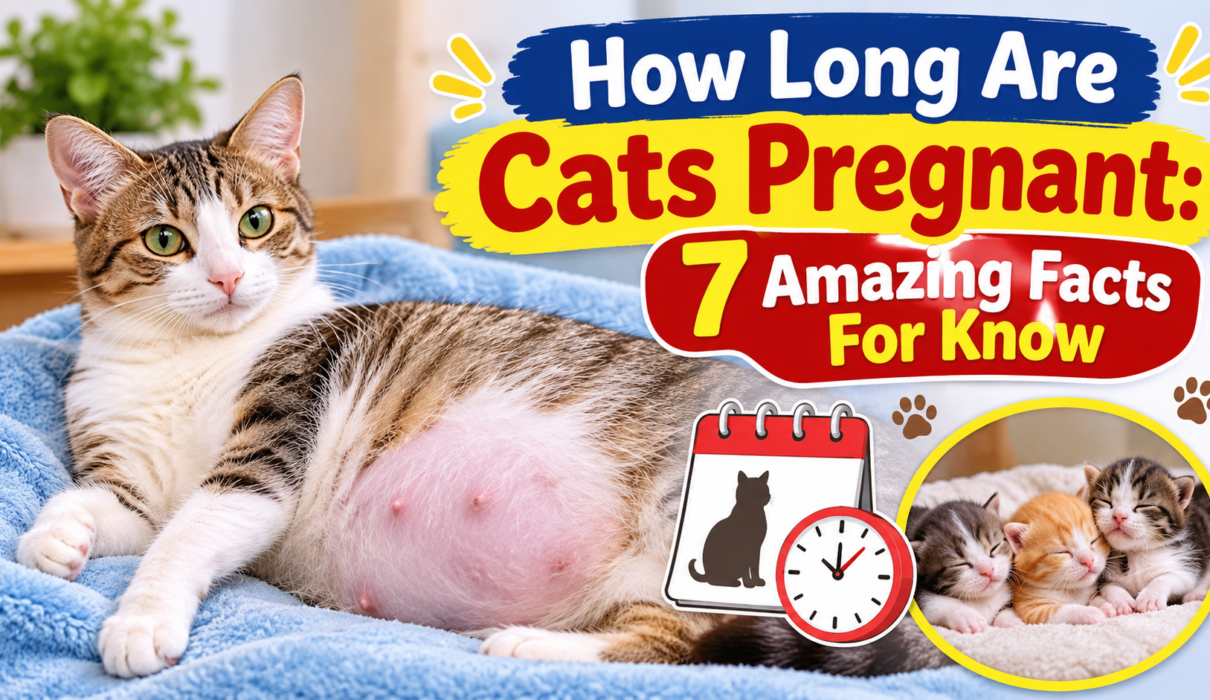
So, how long are cats pregnant, and when should owners expect kittens? Most cats remain pregnant for approximately 63 to 65 days. This equals around nine weeks or just over two months. Some cats deliver slightly earlier or later than expected. Several factors can influence their pregnancy timeline. Knowing the different stages helps you prepare for delivery. It also helps you recognize unusual signs before they become serious.
In this guide, we will explore seven essential facts about cat pregnancy. You will learn about pregnancy signs, development, nutrition, and labor. We will also explain how to prepare for newborn kittens. These practical tips can make the experience easier for your family. Most importantly, they will help you support your cat safely.
1. How Long Are Cats Pregnant? Understanding the Average Timeline
The average cat pregnancy lasts approximately 63 to 65 days. Veterinarians call this period feline gestation. It usually begins around conception and ends with delivery. Most cats give birth after approximately nine weeks. Some pregnancies may fall outside this average period. The exact timing can become difficult when mating dates remain unknown. Therefore, owners should treat estimated delivery dates as general guidance.
If you know your cat’s mating date, tracking pregnancy becomes easier. Write that date somewhere you can check regularly. Your veterinarian can use it to estimate the expected delivery. Cats may mate several times during one heat cycle. Conception might not happen immediately after their first mating. This can make the pregnancy timeline slightly confusing. A veterinary examination provides better information about pregnancy progress.
Average Cat Pregnancy Duration
Most healthy cats carry their kittens for around two months. Their pregnancy usually lasts between 60 and 67 days. The commonly reported average remains approximately 63 to 65 days. Individual pregnancies can vary because every cat is different. Breed, health, and breeding dates may affect estimates. Avoid assuming that every cat will deliver on day 63.
A pregnancy continuing beyond the expected date deserves veterinary advice. Your veterinarian can check the mother and developing kittens. Never try to induce labor using home treatments. Some medications can seriously harm both mother and kittens. Professional guidance remains important throughout the pregnancy. Keeping accurate records also helps your veterinarian make better decisions.
A Simple Week-by-Week Pregnancy Timeline
Understanding each week makes pregnancy easier to follow. Your cat’s body changes gradually as kittens develop. Some changes remain hidden during the earliest weeks. Others become clearer as delivery approaches.
- Week 1: Fertilization and early embryo development begin.
- Week 2: Developing embryos continue moving toward the uterus.
- Week 3: Early signs may include pinker and larger nipples.
- Week 4: Your cat may show noticeable physical changes.
- Week 5: Her abdomen gradually becomes rounder.
- Week 6: Kittens continue developing, and appetite may increase.
- Week 7: Her belly becomes larger as kittens grow.
- Week 8: Nesting behavior may become more noticeable.
- Week 9: Your cat prepares for labor and delivery.
This timeline provides a helpful overview rather than exact medical measurements. Your cat may experience some changes earlier or later. Regular veterinary examinations help monitor her pregnancy more accurately. Avoid judging pregnancy progress through appearance alone. A professional can check her condition and offer suitable advice.
2. Early Signs That Your Cat Might Be Pregnant
Recognizing pregnancy signs early helps you make better care decisions. Cats often show very few changes during their first weeks. Their usual appetite and behavior may remain almost normal. This makes early pregnancy difficult to recognize without professional help. Some owners notice changes only after several weeks. Paying attention to small differences can help you identify possible pregnancy.
One common early sign is a change in nipple appearance. Around three weeks, nipples may become pinker and slightly larger. Veterinarians often call this change pinking up. Your cat may also begin gaining weight gradually. Some cats become more affectionate and seek additional attention. Others prefer quiet places and spend more time resting. These changes can suggest pregnancy, but they cannot confirm it.
Physical Changes During Pregnancy
Physical changes usually become easier to notice as pregnancy progresses. Your cat’s abdomen may gradually become larger and rounder. Her nipples can become more visible and slightly swollen. Weight gain is another common change during this period. Mammary glands may also become more noticeable before delivery. Some cats groom their bellies more frequently than usual.
However, these signs do not always confirm pregnancy. Weight gain can happen because of overeating or other conditions. An enlarged abdomen may also indicate a medical problem. Never press your cat’s belly to check for kittens. This could cause discomfort or injury. Ask your veterinarian to examine her safely and confirm pregnancy.
Behavioral Changes You Should Notice
Pregnancy can affect your cat’s usual daily behavior. Some cats become calmer and enjoy extra affection. Others become less social and prefer quiet surroundings. You might notice longer sleeping periods or reduced playtime. Changes in appetite can also happen during pregnancy. Some cats eat more as their kittens develop.
Nesting behavior usually becomes stronger during the final weeks. Your cat may search for hidden and comfortable places. She might scratch blankets or rearrange soft bedding. These actions help her prepare a suitable delivery space. Give her enough privacy without completely ignoring her needs. Watch her behavior and contact your veterinarian about unusual changes.
3. The Three Main Stages of Cat Pregnancy
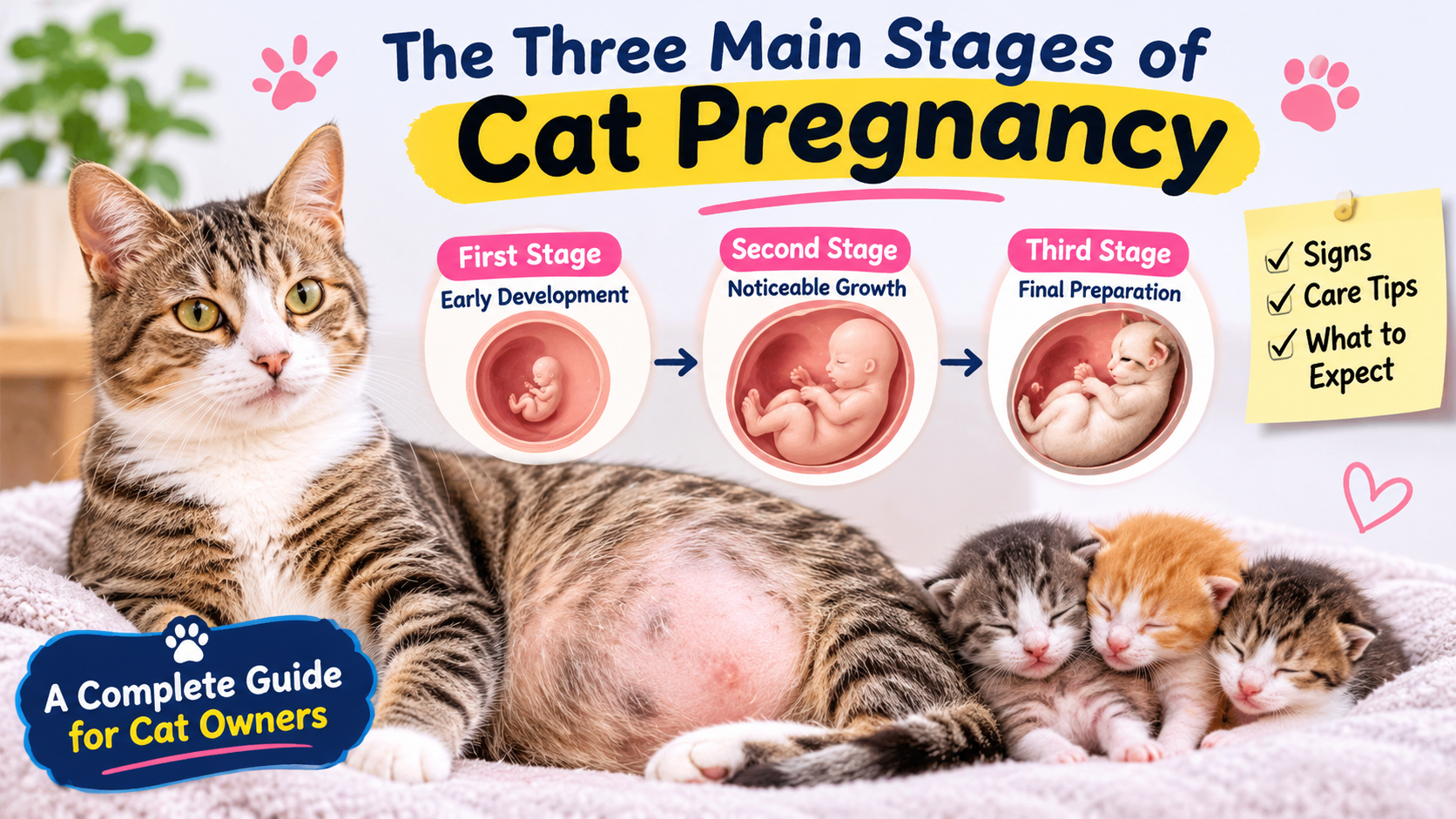
Cat pregnancy develops through three general stages. Each stage brings important changes inside the mother’s body. Tiny embryos gradually develop into recognizable baby kittens. Their organs, bones, and other body parts continue growing. Your cat’s nutritional needs also change throughout pregnancy. Understanding these stages helps you provide suitable daily care.
First Stage: Early Development
The first stage covers approximately the first three weeks. Fertilized eggs travel toward the uterus after conception. They gradually develop into tiny embryos. During this period, your cat may show very few signs. Her appetite and daily activities might remain almost unchanged. Some cats experience mild behavioral changes or occasional nausea.
Avoid making unnecessary changes to her normal routine. Provide fresh water and balanced food every day. Arrange a veterinary appointment if pregnancy seems possible. Your veterinarian can discuss safe care and suitable examinations. Early guidance also helps identify potential health concerns. Keep your cat comfortable while her pregnancy develops.
Second Stage: Noticeable Growth
The second stage generally covers weeks four through six. Your cat’s abdomen may become more noticeable during this period. Her nipples can appear larger and pinker. Weight gain usually becomes easier to recognize. Kittens continue developing important organs and body structures. Your cat may also need additional food as pregnancy progresses.
Offer several smaller meals if larger portions feel uncomfortable. Make sure she always has access to clean water. Avoid giving unfamiliar foods or unnecessary supplements. Keep her environment peaceful and comfortable. Regular veterinary checks help monitor her weight and health. Your veterinarian can also recommend suitable feeding amounts.
Third Stage: Final Preparation
The final stage covers approximately weeks seven through nine. Kittens grow quickly and take up more space. Your cat’s belly may look noticeably larger. She might sleep more and avoid energetic activities. Her mammary glands can become fuller before delivery. Nesting behavior may also become stronger during these weeks.
Prepare a quiet birthing area before labor begins. Keep the space away from loud noises and busy rooms. Allow your cat to explore her chosen nesting area. Place clean bedding inside a comfortable box. Contact your veterinarian if you notice unusual discharge or distress. Careful preparation makes the final pregnancy stage easier.
4. How to Confirm Your Cat’s Pregnancy Safely
Physical signs can provide useful clues about pregnancy. A veterinary examination offers much more reliable information. Your veterinarian can check your cat’s health and development. They can also estimate how far along she might be. Early confirmation helps you plan proper food and care. It also gives you time to discuss possible pregnancy risks.
Never press or squeeze your cat’s belly yourself. This can cause discomfort and may harm developing kittens. Veterinary professionals use suitable methods to examine pregnant cats. The right examination depends on pregnancy timing and health. Your veterinarian can explain which option is most appropriate.
Veterinary Examination
A veterinarian may gently examine your cat’s abdomen. This method can sometimes identify developing kittens. It usually becomes useful after several weeks. However, the results depend on pregnancy stage and examination conditions. Only an experienced professional should perform this examination.
Your veterinarian may also discuss your cat’s medical history. They might ask about mating dates and recent behavior. This information helps estimate pregnancy progress. A physical examination can also identify other health concerns. Never attempt abdominal palpation at home. Professional assessment keeps both mother and kittens safer.
Ultrasound Scan
An ultrasound is another common method for confirming pregnancy. It allows veterinarians to view developing kittens inside the uterus. Pregnancy may become detectable around three weeks after mating. Your veterinarian may also check fetal heart activity. This examination provides useful information about developing kittens.
Ultrasound can help assess pregnancy progress and fetal health. It may not always provide an exact kitten count. Your veterinarian can explain what the scan reveals. The examination is generally comfortable for most cats. It also helps owners understand their cat’s condition.
X-Rays During Later Pregnancy
X-rays can help determine the number of kittens later. Their skeletons become visible after sufficient bone development. Veterinarians generally use this method during late pregnancy. It can help owners understand how many kittens to expect. Knowing the litter size may also help monitor delivery.
X-rays are not useful for confirming very early pregnancy. Your veterinarian will decide whether this examination is necessary. They can also explain the timing and possible benefits. Never arrange unnecessary imaging without professional advice. Proper examination helps prepare for a safer delivery.
5. The Best Ways to Care for a Pregnant Cat
Good care plays an important role throughout pregnancy. Your cat needs proper nutrition, clean water, and peaceful surroundings. She also needs regular veterinary attention. Small changes in daily care can make a difference. Avoid stressful activities and unnecessary handling. Let your cat rest whenever she needs it. Give her a comfortable space where she feels safe.
Provide High-Quality Food
Nutrition becomes especially important during feline pregnancy. Your cat needs enough energy for herself and developing kittens. Many veterinarians recommend complete kitten food during pregnancy. These formulas provide nutrients needed for growth and development. Choose a nutritionally balanced food designed for growth or reproduction. Introduce dietary changes gradually to avoid digestive problems.
Offer smaller meals if your cat prefers them. Fresh drinking water should remain available throughout the day. Avoid giving extra calcium or vitamin supplements without veterinary advice. Excessive supplementation can create nutritional problems. Your veterinarian can recommend suitable food and feeding amounts. The right amount depends on your cat’s weight and condition.
Create a Comfortable Resting Area
Pregnant cats need a calm place for proper rest. Choose a quiet corner away from busy household areas. Add clean blankets or soft washable towels. Make sure the area stays warm and comfortable. Keep food, water, and litter nearby. Your cat should reach everything without unnecessary effort. Let her choose whether she wants to use that space.
Avoid forcing your cat to stay inside one particular box. Some cats prefer different nesting places. Respect her choice when the location remains safe. Keep the area clean and free from household hazards. A peaceful environment can reduce unnecessary stress. Your cat should always feel secure and comfortable.
Keep Your Cat Safe Indoors
Keeping your pregnant cat indoors is especially important. Outdoor environments can expose her to injuries and infections. She might also experience stress around unfamiliar animals. A safe indoor environment makes monitoring much easier. You can observe her eating, sleeping, and bathroom habits. Avoid allowing her to roam freely near delivery.
Keep other pets from disturbing her resting area. Make sure windows and balconies remain secure. Remove dangerous plants and household chemicals from reach. Your cat needs a safe environment throughout pregnancy. These simple precautions help reduce avoidable risks.
Maintain Gentle Daily Care
Continue offering affection without forcing physical contact. Avoid lifting her unnecessarily during later pregnancy. Keep her litter box clean and easy to access. Watch for unusual discharge, weakness, or appetite changes. These signs deserve veterinary attention. Regular monitoring helps you notice problems early.
Discuss vaccinations and parasite prevention with your veterinarian. Some treatments may not be suitable during pregnancy. Avoid giving medications without professional instructions. Your cat needs safe and appropriate care. Gentle handling, clean surroundings, and regular checks support her health.
6. Preparing Your Home for Kittens and Understanding Labor
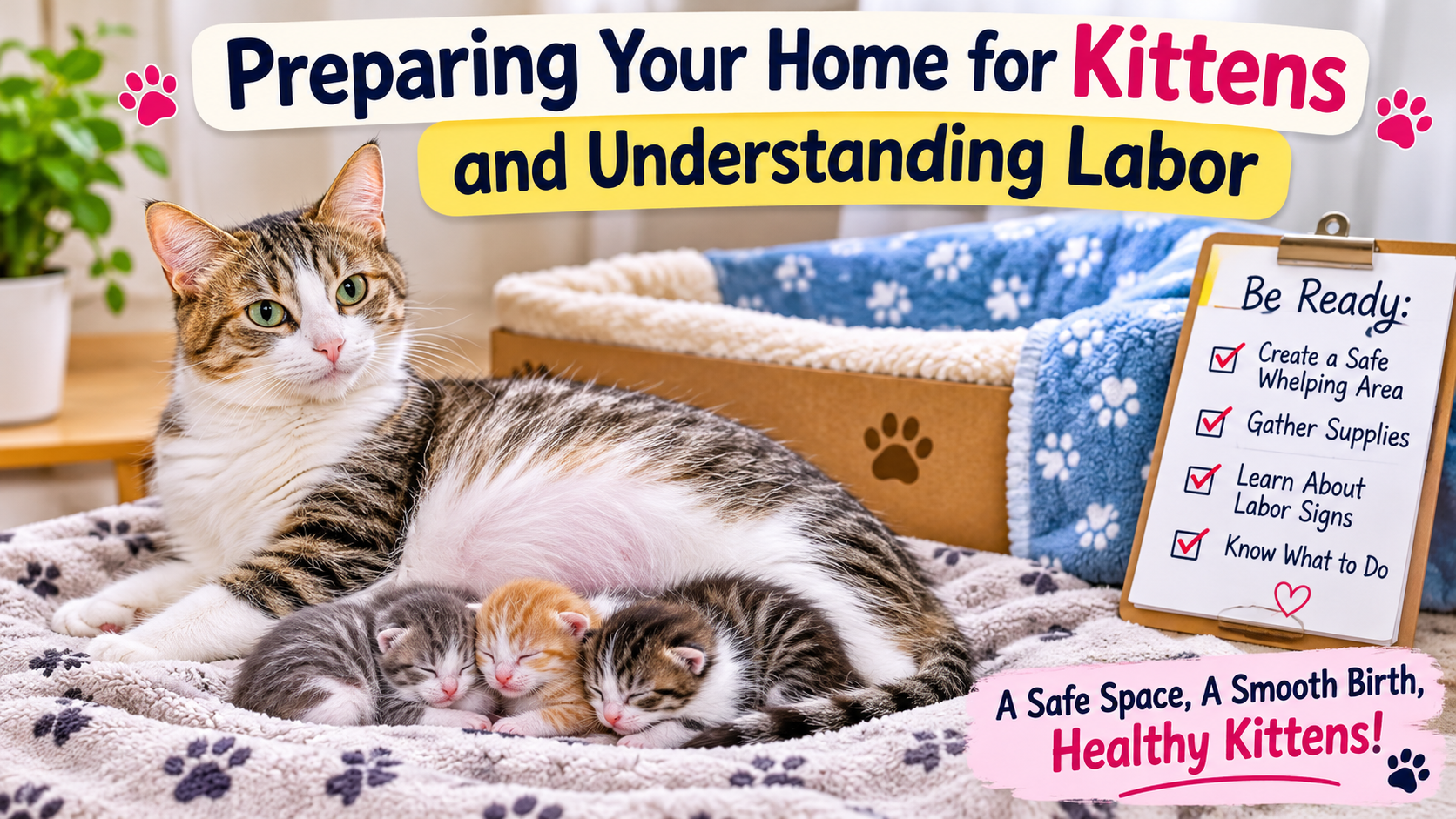
Preparing before delivery makes the experience easier for everyone. Your cat needs a private and comfortable birthing space. Start preparing this area during the final pregnancy weeks. Choose a quiet location with limited household activity. A large cardboard box can work well for nesting. Line it with clean towels or washable blankets. Make sure your cat can enter and leave easily.
How to Prepare a Cat Birthing Box
A suitable nesting box does not need expensive materials. A simple setup can provide enough comfort and privacy. Consider preparing these basic items before delivery:
- A spacious cardboard box with low entrance sides.
- Several clean and washable towels.
- Soft blankets for warmth and comfort.
- Fresh water placed within easy reach.
- A nearby litter box.
- Clean replacement bedding for later use.
Introduce the box before your cat starts nesting. Let her explore it without pressure. Some cats prefer different locations despite your preparation. Respect her choice when the location remains safe. Keep children and other pets away during delivery. Prepare your veterinarian’s contact information beforehand. Having these details nearby can reduce unnecessary stress.
Signs That Labor Is Getting Closer
Your cat may show several changes before giving birth. She might become restless or seek extra attention. Some cats repeatedly visit their chosen nesting area. Others become quieter and avoid family activities. Her appetite might decrease shortly before labor. You may also notice increased grooming around her genital area.
Milk production can begin during the final pregnancy period. Your cat may scratch bedding or repeatedly change positions. Some cats begin panting as labor approaches. These signs suggest delivery may be getting closer. However, every cat experiences labor differently. Stay nearby without disturbing her unnecessarily. Contact your veterinarian if you notice concerning symptoms.
What Happens During Cat Labor?
Cat labor usually happens in three general stages. The first stage involves contractions and preparation for delivery. Your cat may pant, move around, or change positions. She might also vocalize more than usual. The second stage begins when kittens start arriving. Each kitten is usually delivered inside a protective sac. The mother generally opens the sac and cleans her kitten.
She also removes the umbilical cord naturally. The third stage involves passing the placenta after delivery. Cats may eat some placentas during labor. Birth intervals can vary between individual kittens. Some mothers rest briefly before continuing delivery. Keep the room peaceful and avoid unnecessary interference. Your veterinarian can guide you if complications appear.
When Should You Contact a Veterinarian?
Most cats deliver without major assistance. Still, certain warning signs require immediate professional attention. Contact your veterinarian if you notice:
- Strong contractions without a kitten arriving.
- Heavy bleeding during labor.
- Green or foul-smelling discharge before the first kitten.
- Extreme weakness or sudden collapse.
- A kitten becoming stuck during delivery.
- Severe pain or obvious distress.
- Long delays accompanied by continued straining.
Do not pull a kitten from the birth canal. Avoid giving medicines or home treatments without veterinary advice. Complicated labor can become dangerous for mother and kittens. Quick professional help can protect their health. Keep your veterinarian informed about unusual changes. Never wait when your cat appears seriously unwell.
7. Caring for Your Cat and Her Kittens After Birth
Your responsibility continues after the kittens arrive. The mother needs extra nutrition and a peaceful recovery space. Newborn kittens also require warmth and regular feeding. Most healthy mothers instinctively clean and nurse their babies. They usually remove birth sacs and lick their kittens. This helps stimulate breathing and normal movement. Give the mother privacy while monitoring her condition. Step in only when necessary or when your veterinarian advises.
Make Sure Every Kitten Starts Nursing
Newborn kittens need their mother’s milk as soon as possible. Early milk contains important protective antibodies. This first milk is called colostrum. It supports kittens during their earliest days. Watch whether each kitten reaches a nipple successfully. Weak or cold kittens may struggle to nurse. Contact your veterinarian if a kitten cannot feed properly. Never give ordinary cow’s milk to newborn kittens.
Keep Newborn Kittens Warm
Very young kittens cannot control their body temperature properly. They depend on their mother and warm surroundings. Keep their nesting area comfortable and free from drafts. Make sure bedding stays clean and dry. Avoid placing kittens directly against heating equipment. Excessive heat can cause burns or overheating. Ask your veterinarian about safe warming methods if needed.
Support the Mother With Proper Nutrition
Nursing requires considerable energy from the mother cat. She may need much more food than before pregnancy. Continue feeding a suitable kitten or growth formula. Fresh water should always remain available. Your veterinarian can recommend feeding amounts for her needs. Avoid giving supplements without professional guidance. Monitor her appetite, weight, and general behavior. These steps support her recovery and milk production.
Monitor the Mother and Her Litter
Check the mother and kittens regularly without disturbing them. Make sure the mother appears comfortable and attentive. Watch for poor appetite, fever, or unusual discharge. Kittens should gradually become stronger and more active. Their weight should also increase with proper feeding. Contact your veterinarian about weak kittens or poor weight gain. Early support can prevent serious health problems.
Extra Tips for Owners Expecting Their First Litter

Your first experience with cat pregnancy can feel overwhelming. You may worry about every small movement or behavior change. Remember that most cats manage birth naturally. Your role involves providing safety, proper nutrition, and veterinary support. Prepare everything before the final pregnancy weeks. Keep important supplies together in one accessible location. Save your veterinarian’s number on your phone.
Avoid bathing your pregnant cat unless your veterinarian recommends it. Do not introduce unfamiliar foods without a clear reason. Keep household chemicals and dangerous plants out of reach. Avoid stressful visitors during the final weeks. Give your cat enough time to rest peacefully. Most importantly, never ignore unusual symptoms. Professional advice is always better than guessing. These habits help create a safer environment for mother and kittens.
Frequently Asked Questions About Cat Pregnancy
Can a Cat Get Pregnant During Her First Heat?
Yes, a cat can become pregnant during her first heat cycle. Some female cats reach sexual maturity around four months old. This means pregnancy can happen earlier than many owners expect. Keep unspayed female cats away from unneutered males. Speak with your veterinarian about suitable spaying options. Early planning helps prevent unexpected pregnancies and related health risks.
How Long Are Cats Pregnant in Weeks?
Most cats remain pregnant for approximately nine weeks. This equals around 63 to 65 days. Some pregnancies may fall outside this average range. Your veterinarian can estimate the delivery date more accurately. Recording possible mating dates also helps track pregnancy progress. Regular examinations provide additional information about the mother and kittens.
How Many Kittens Can a Cat Have?
A typical litter contains around four kittens. Some cats have smaller or larger litters. The number depends on several factors, including age and health. Your veterinarian may use ultrasound or later X-rays. These examinations can help estimate the litter size. Knowing the expected number can help owners monitor delivery.
How Long Are Cats Pregnant Before Showing?
Most cats show noticeable physical changes after several weeks. Pinker nipples may appear around the third week. A growing belly usually becomes clearer later. Some cats show changes earlier than others. A veterinary examination remains the best confirmation method. Never rely on physical appearance alone when pregnancy is suspected.
Can Cats Get Pregnant While Nursing?
Yes, cats can become pregnant while nursing their kittens. Nursing does not reliably prevent another heat cycle. A female cat may become fertile again surprisingly quickly. Keep her away from unneutered males after delivery. Ask your veterinarian about the safest future breeding or spaying plan. This helps prevent another unexpected pregnancy.
Do All Cats Have the Same Pregnancy Length?
No, every cat does not follow exactly the same timeline. Most pregnancies last around 63 to 65 days. Individual health and breeding dates can affect estimates. Some cats may deliver earlier or later. Regular veterinary checks help monitor their progress. Contact your veterinarian if delivery seems unusually delayed.
Conclusion
Understanding how long are cats pregnant helps owners prepare for healthy kittens. Most cats carry their babies for approximately 63 to 65 days. Every pregnancy needs proper nutrition, comfort, and veterinary attention. Watch for physical changes throughout the nine-week period. Prepare a quiet nesting area before labor begins. Give your cat enough privacy during delivery and recovery. Monitor newborn kittens and ensure they receive enough milk. Contact your veterinarian whenever unusual symptoms appear. With patience and responsible care, you can support your cat. A little preparation makes this beautiful experience safer for everyone.