

 By
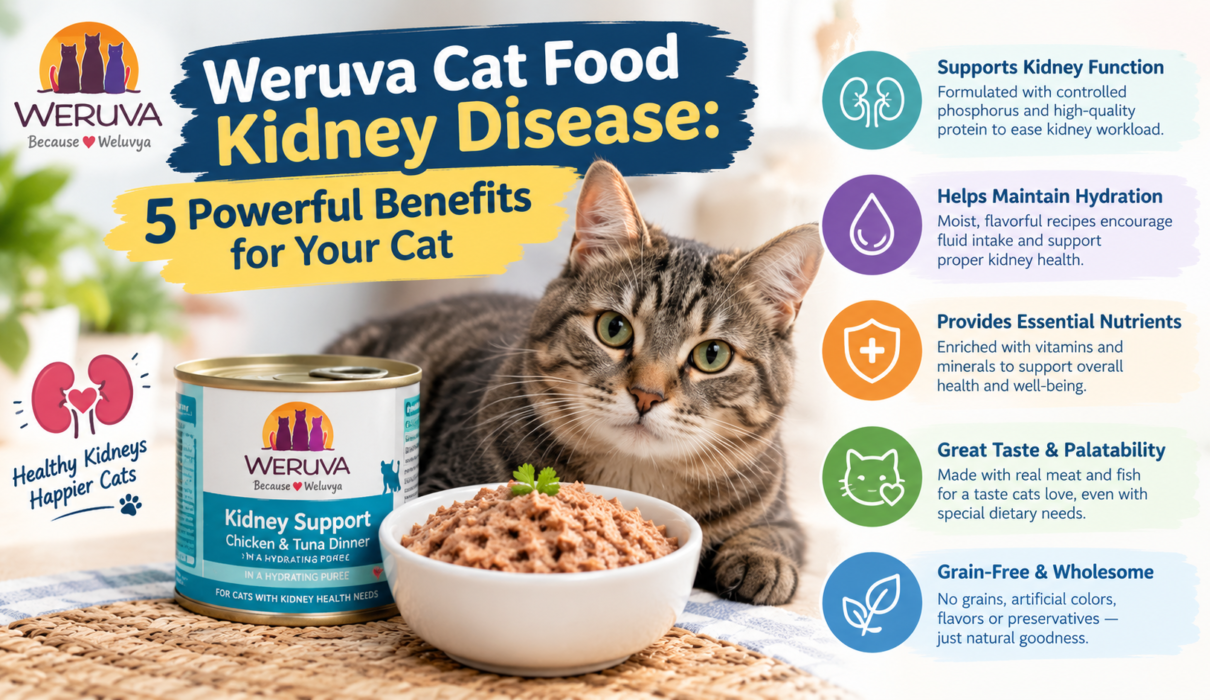
Weruva Cat Food Kidney Disease: 5 Powerful Benefits for Your Cat
Introduction to Weruva Cat Food Kidney Disease
When a cat is diagnosed with kidney disease, choosing the right food becomes an important part of daily care. The kidneys help remove waste products from the blood, regulate fluids, and maintain the body’s mineral balance. When kidney function declines, cats may experience increased thirst, frequent urination, reduced appetite, weight loss, and other health problems.
Many cat owners explore wet food options because they contain more moisture than most dry foods. Weruva is a cat food brand known for its variety of wet food recipes, textures, and flavors. However, not every Weruva recipe is specifically designed for cats with kidney disease.
Before choosing Weruva cat food for kidney disease, it is important to understand your cat’s nutritional needs. Cats with chronic kidney disease may benefit from a veterinary therapeutic diet formulated to manage phosphorus levels and provide appropriate amounts of protein, calories, and other essential nutrients.
Weruva may be an option to discuss with your veterinarian, particularly if your cat struggles to eat its current food. The best choice depends on the nutritional profile of the specific recipe, your cat’s stage of kidney disease, and any other medical conditions or weruva cat food kidney disease.
In this guide, we will explore five potential benefits of Weruva wet food, explain what to check on its nutrition label, and discuss why a veterinarian’s advice is important when feeding a cat with kidney disease.
What Is Weruva Cat Food for Kidney Disease?
Weruva offers a range of wet cat food products with different ingredients, textures, and flavors. Depending on the recipe, products may contain meat, poultry, fish, broth, or other ingredients. Many owners consider wet food because its moisture content can contribute to a cat’s daily fluid intake .
However, Weruva cat food for kidney disease should not automatically be considered a therapeutic kidney diet. A regular wet food recipe may provide moisture and encourage eating, but those features alone do not mean it meets the specialized nutritional requirements of a cat with kidney disease.
Understanding the Difference Between Regular Wet Food and Renal Diets
Veterinary renal diets are formulated to support cats with kidney problems. Depending on the product, they may include:
- Controlled phosphorus: Managing dietary phosphorus is an important part of many chronic kidney disease treatment plans.
- Appropriate protein levels: The goal is to provide adequate, high-quality protein while considering the cat’s individual condition.
- Adequate calories: Maintaining body weight and muscle mass is especially important when appetite decreases.
- Additional nutritional support: Some renal diets contain adjusted levels of certain fatty acids, vitamins, minerals, and other nutrients.
Regular wet food may offer useful hydration and variety, but it may not provide the same nutritional profile as a prescription renal diet.
Is Weruva Specifically Formulated for Cats with Kidney Disease?
Do not assume that every Weruva product is designed to manage kidney disease. Check the packaging and manufacturer’s nutritional information for the exact product you are considering.
Look for its nutritional adequacy statement, phosphorus information when available, calorie content, and whether the food is intended for complete daily feeding or supplemental feeding. If phosphorus information is not listed, ask the manufacturer or your veterinarian whether it can be obtained.
Your veterinarian can help determine whether a particular Weruva recipe is appropriate, whether it should be used alongside another food, or whether a therapeutic renal diet is a better option.
Weruva Cat Food Kidney Disease: 5 Powerful Benefits
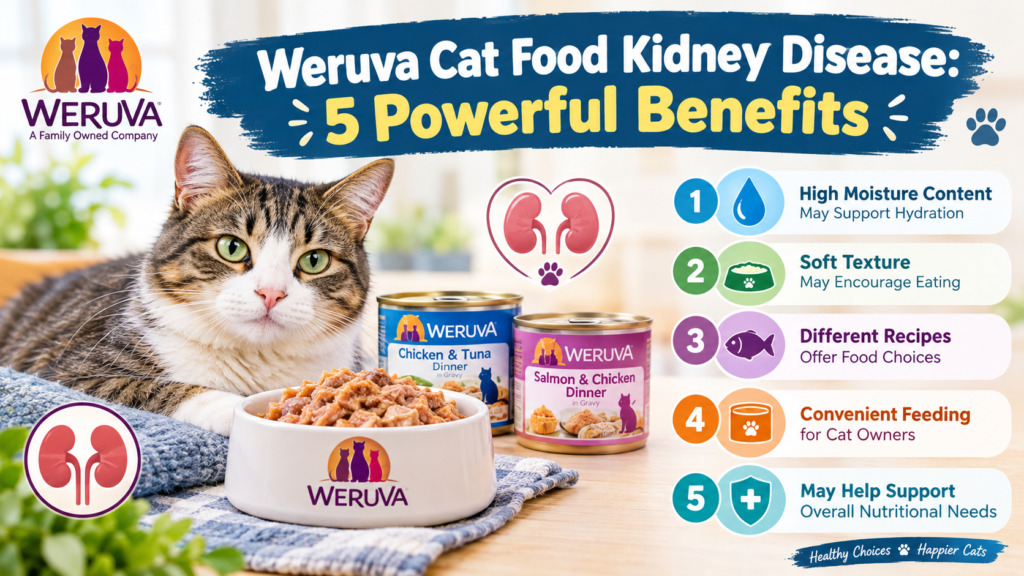
Weruva wet food may offer some practical advantages for certain cats, but the benefits depend on the specific recipe and the cat’s health. The following points explain potential advantages without assuming that regular wet food treats or reverses kidney disease or weruva cat food kidney disease.
Benefit 1: High Moisture Content May Support Hydration
Hydration is an important consideration for cats with kidney disease. As kidney function declines, some cats produce larger amounts of urine and may lose more water than usual. They may compensate by drinking more, but some cats do not drink enough to replace their fluid losses.
Wet cat food contains substantially more moisture than most dry food. When a cat eats wet food, it receives water as part of its meal, which can contribute to daily fluid intake.
Why Hydration Matters for Cats with Kidney Disease
Adequate fluid intake helps support normal body functions. Cats that are becoming dehydrated may show signs such as lethargy, weakness, reduced appetite, or worsening general condition. These symptoms can have several causes and should not be diagnosed at home.
If a Weruva recipe is suitable for your cat, its moisture content may be one reason to consider it as part of a feeding plan.
Ways to Encourage Your Cat to Get More Water
You can support hydration by:
- Providing clean, fresh water throughout the day.
- Placing water bowls in several quiet locations.
- Trying a cat water fountain if your cat enjoys moving water.
- Offering suitable wet food if your veterinarian approves.
- Keeping water bowls away from litter boxes and in locations your cat can easily reach.
Some cats with advanced kidney disease need additional veterinary treatment, such as prescribed fluids. Wet food alone may not be enough to manage dehydration.
Important: Do not force water into your cat’s mouth or start fluid therapy at home without veterinary instructions.
Benefit 2: Soft Texture May Encourage Eating
Cats with kidney disease may develop a reduced appetite. Nausea, dehydration, changes in their general health, or other medical problems can make eating less appealing. Some cats also become selective about food texture and smell.
Wet food often has a soft texture and a noticeable aroma, which may make it more appealing to some cats. Weruva offers different recipes and textures, so a suitable option may help an owner find food that a particular cat is willing to eat.
However, palatability varies between individual cats. A food that one cat enjoys may not appeal to another.
Why Maintaining Food Intake Is Important
Cats need enough calories and essential nutrients to maintain body weight and muscle mass. Prolonged poor appetite can lead to weight loss and other complications, especially in cats that already have a chronic illness.
If your cat refuses its prescribed renal diet, do not simply stop feeding it or allow it to go without food while waiting for it to accept another option. Contact your veterinarian to discuss the reason for the refusal and suitable alternatives.
Tips for Helping a Cat Eat
- Offer fresh food in small, appropriate portions.
- Serve meals in a quiet, comfortable location.
- Keep feeding bowls clean.
- Ask your veterinarian whether gently warming the food is appropriate.
- Monitor how much your cat actually eats instead of assuming that offering food is enough.
If your cat has a persistent loss of appetite, vomiting, or noticeable weight loss, seek veterinary advice promptly. These signs may require treatment rather than a simple food change.
Benefit 3: Different Recipes Offer Food Choices
One practical advantage of a broad wet food range is the availability of different textures and flavors. Cats can have strong preferences, and finding a food they willingly eat may be challenging when they are unwell or weruva cat food kidney disease.
Depending on the available product range, Weruva recipes may differ in ingredients, consistency, and nutritional composition. These differences can give cat owners options to discuss with their veterinarian.
Nevertheless, variety should not be the only factor in choosing food for a cat with kidney disease.
Check the Ingredients and Nutritional Information
Before selecting a recipe, review the following:
- Phosphorus content: Ask about the amount on a dry-matter or calorie basis when available, because values can be difficult to compare across foods with different moisture levels.
- Protein content: Consider the amount and quality of protein in relation to your cat’s condition.
- Calories: Make sure the food can help meet your cat’s energy requirements.
- Complete and balanced status: Check whether the product is intended to provide complete daily nutrition or is only a supplemental food.
- Other dietary needs: Consider food allergies, digestive sensitivities, and other conditions that may affect your cat’s diet.
Do not assume that a fish-based, chicken-based, or other particular recipe is automatically better or worse for kidney disease. The overall nutritional profile matters more than one ingredient alone.
Can You Rotate Different Weruva Recipes?
Possibly, but it depends on the recipes and your cat’s dietary plan. Rotating foods without checking their nutritional composition can make it harder to maintain an appropriate diet.
If your veterinarian approves Weruva as an option, ask whether different recipes can be used interchangeably and whether their phosphorus and other nutrient levels are suitable.
Benefit 4: Convenient Feeding for Cat Owners
Wet food can be convenient for many households. Depending on the packaging, it may be easy to portion, serve, and incorporate into a daily feeding routine. This can be useful when a cat needs several small meals instead of one or two large meals.
Convenience is helpful, but it should never replace checking whether a food meets your cat’s medical and nutritional needs.
How to Serve Wet Cat Food Safely
Follow the product’s storage and serving instructions. As a general precaution:
- Wash your hands before handling pet food.
- Use clean bowls and serving utensils.
- Refrigerate opened food promptly according to the label.
- Cover and store leftovers as directed by the manufacturer.
- Discard food that has been left out too long or shows signs of spoilage.
Avoid leaving wet food at room temperature for extended periods, particularly in warm weather.
Monitor Your Cat’s Daily Intake
Cats with kidney disease may eat different amounts from day to day. Keeping a simple record can help you notice changes early.
Track:
- How much food you offer and how much your cat eats.
- Changes in body weight.
- Water intake and urination patterns.
- Vomiting or changes in stool.
- Changes in energy and behavior.
Share significant changes with your veterinarian. A convenient food routine is most useful when it also helps you monitor your cat’s overall health.
Benefit 5: May Help Support Overall Nutritional Needs
A cat with kidney disease still needs a complete and balanced diet that supplies sufficient calories, protein, fats, vitamins, and minerals. Maintaining good nutrition becomes particularly important if the cat has a reduced appetite or is losing weight.
Weruva wet food may help some cats eat more willingly or receive additional moisture. However, these potential advantages do not establish that a particular recipe is nutritionally suitable for kidney disease.
Why Phosphorus and Protein Matter
Phosphorus management is an important consideration in many cats with chronic kidney disease. Depending on the cat’s blood test results and disease stage, a veterinarian may recommend a diet with controlled phosphorus levels.
Protein also requires careful consideration. Cats need protein to maintain body tissues and muscle. The appropriate amount and quality depend on the individual cat, so severely restricting protein without veterinary guidance can be harmful.
Other factors include calorie intake, body condition, hydration, and the presence of other illnesses. A veterinarian may recommend a therapeutic renal diet because it is designed around several of these nutritional considerations rather than just one.
How to Choose Food That Fits Your Cat’s Needs
Before using Weruva as a major part of your cat’s diet, ask your veterinarian:
- Is this specific recipe suitable for my cat’s kidney disease stage?
- Is its phosphorus content appropriate?
- Does it provide complete and balanced nutrition?
- Will it provide enough calories to maintain a healthy weight?
- Should it replace, supplement, or be avoided alongside the current renal diet?
The answers may differ depending on your cat’s laboratory results, appetite, body condition, and other medical conditions.
The bottom line: Weruva wet food may be useful for moisture, food variety, palatability, and feeding convenience. Its suitability for kidney disease depends on the exact recipe and your veterinarian’s assessment. It should not automatically replace a prescribed renal diet.
Weruva Cat Food for Kidney Disease: What Should You Check?
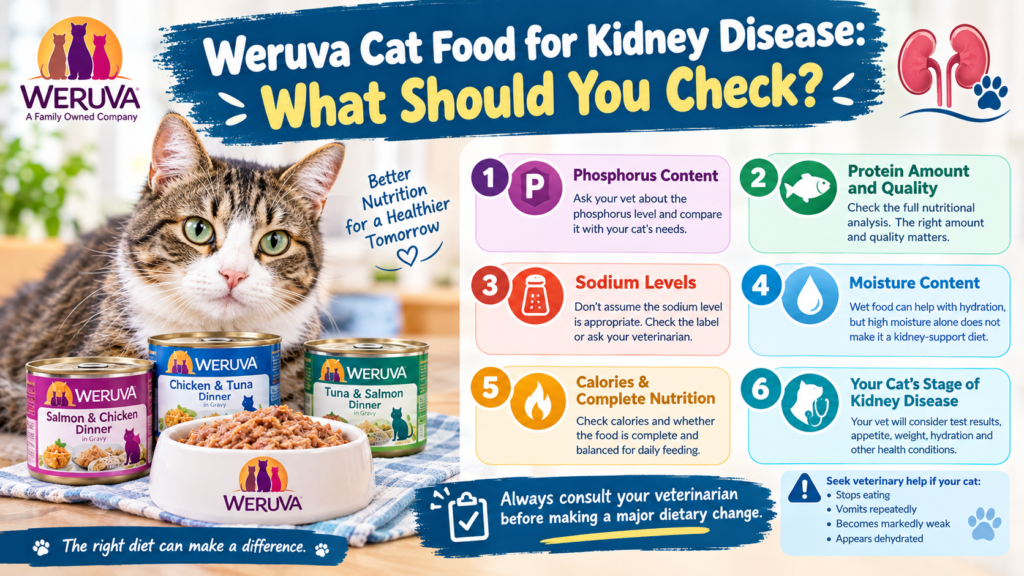
Choosing a food for a cat with kidney disease requires more than reading the product name or ingredient list. The most useful information is the food’s complete nutritional profile and whether it meets your cat’s specific medical needs.
Phosphorus Content
Phosphorus is one of the key nutrients to discuss with your veterinarian. Many therapeutic renal diets are formulated to restrict phosphorus compared with standard maintenance foods.
If the manufacturer does not provide phosphorus information for a specific Weruva recipe, ask whether the data are available. Avoid assuming that a recipe is low in phosphorus simply because it is wet food or contains a particular protein source or weruva cat food kidney disease.
Protein Amount and Quality
Cats require protein, but the appropriate intake for a cat with kidney disease should be individualized. Look at the full nutritional analysis rather than judging a recipe only by its first ingredient.
Ask your veterinarian whether the recipe provides appropriate protein for your cat’s condition and whether a therapeutic renal diet is recommended.
Sodium Levels
Sodium is another factor to consider when evaluating a diet for a cat with kidney disease. Do not assume a product has an appropriate sodium level without checking its nutritional information or consulting your veterinarian.
The best choice depends on the cat’s overall health and any other medical conditions.
Moisture Content
Moisture is a useful consideration because wet food can contribute to daily water intake. However, a high moisture percentage does not automatically make a food a kidney-support diet or weruva cat food kidney disease.
Consider moisture alongside phosphorus, calories, protein, and overall nutritional adequacy.
Calories and Complete Nutrition
A cat that eats too little can lose weight and muscle. Check the calorie content so you can estimate how much food your cat needs, and determine whether the product is complete and balanced for daily feeding.
Some products are intended only for supplemental feeding and should not be used as the sole source of nutrition.
Your Cat’s Stage of Kidney Disease
Cats with kidney disease do not all have identical needs. Your veterinarian may consider blood and urine test results, hydration, appetite, body weight, blood pressure, and other health conditions when recommending a diet.
For this reason, the best Weruva recipe—if one is appropriate at all—cannot be determined by the brand name alone.
Before making a major dietary change, discuss the exact product with your veterinarian. If your cat stops eating, vomits repeatedly, becomes markedly weak, or appears dehydrated, contact a veterinary professional promptly rather than relying on a food change alone.
Weruva Cat Food for Kidney Disease vs. Prescription Renal Diets
When comparing Weruva cat food for kidney disease with prescription renal diets, it is important to understand that regular wet food and veterinary kidney food serve different purposes. Both may provide moisture and nutrition, but their nutritional formulations can vary considerably .
Weruva offers different wet food recipes, while veterinary renal diets are specifically formulated to meet certain nutritional needs of cats with chronic kidney disease. Your veterinarian can help determine which option is most appropriate for your cat or weruva cat food kidney disease.
What Makes Prescription Renal Diets Different?
Veterinary renal diets are designed to support cats with kidney disease through carefully adjusted nutritional profiles. Depending on the product, these diets may include:
- Controlled phosphorus: Managing dietary phosphorus is a major consideration for many cats with chronic kidney disease.
- Adjusted protein levels: The diet provides protein in amounts selected for the needs of cats with kidney problems.
- Adequate calories: Sufficient energy helps support body weight and muscle maintenance.
- Additional nutritional adjustments: Some formulas include specific fatty acids, vitamins, minerals, and other nutrients.
A regular wet food may contain plenty of moisture but may not offer the same balance of nutrients as a therapeutic renal diet.
Can Weruva Replace Prescription Kidney Food?
Not automatically. If your veterinarian has prescribed a renal diet, do not replace it with a regular Weruva recipe without discussing the change first.
In some situations, a cat may refuse its prescribed food. Because eating enough is important, your veterinarian may help identify an alternative diet or a feeding strategy that balances nutritional needs with the cat’s willingness to eat.
When discussing Weruva, provide the exact product name and nutritional information. Ask whether its phosphorus content, protein profile, calories, and overall nutritional adequacy suit your cat’s condition.
Which Option Is Better for Your Cat?
There is no single answer for every cat. A therapeutic renal diet may be preferable when it meets the cat’s needs and is accepted willingly. A different food may need to be considered if the cat refuses its current diet or has other dietary challenges.
The best decision should account for your cat’s kidney function, appetite, body condition, laboratory results, and any additional medical conditions.
Homemade Cat Food for Cats with Kidney Disease: Is It a Good Option?
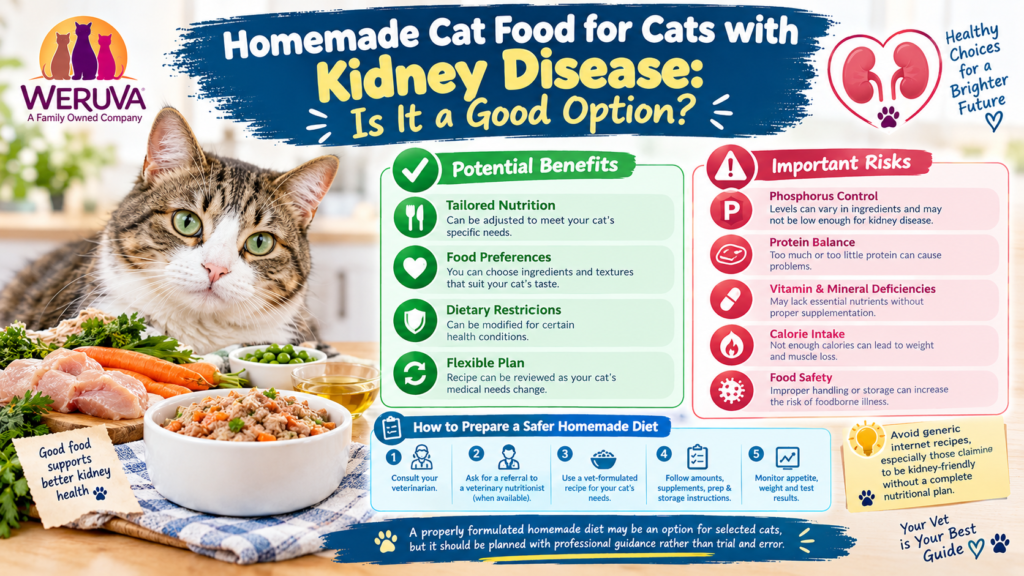
Some owners consider homemade cat food because they want greater control over ingredients or have a cat that refuses commercial diets. Although homemade meals may appear appealing, preparing a nutritionally balanced diet for a cat with kidney disease can be complicated or weruva cat food kidney disease.
Cats require specific amounts of essential amino acids, fatty acids, vitamins, minerals, and other nutrients. A meal made from meat alone or a mixture of commonly available ingredients may not meet these requirements.
Potential Benefits of Homemade Cat Food
When properly formulated by a qualified veterinary nutritionist, a homemade diet may offer certain advantages:
- It can be tailored to an individual cat’s nutritional requirements.
- Ingredients and textures can be selected to suit some food preferences.
- The feeding plan can be adjusted for certain dietary restrictions.
- The recipe can be reviewed as the cat’s medical needs change.
These advantages depend on using a professionally formulated recipe and following it accurately. Homemade food is not automatically healthier than commercial food.
Important Risks of Homemade Cat Food for Cats with Kidney Disease
Preparing food for a cat with kidney disease requires particular attention to nutrient balance.
Phosphorus control: Many cats with chronic kidney disease need careful management of dietary phosphorus. The phosphorus content of homemade ingredients can vary, so simply avoiding one ingredient may not be enough.
Protein balance: Cats need protein to maintain their muscles and body tissues. Excessive restriction can contribute to nutritional problems, while the appropriate amount depends on the cat’s condition.
Vitamin and mineral deficiencies: Homemade meals may lack essential nutrients if they are not properly supplemented.
Calorie intake: A cat that eats too little can lose weight and muscle. A suitable recipe must provide enough energy in a form the cat will actually eat.
Food safety: Improper handling, storage, or preparation can increase the risk of foodborne illness. Raw homemade diets can present additional risks or Best Wet Cat Food for Kidney Problems.
How to Prepare a Safer Homemade Diet
If you are considering homemade cat food for cats with kidney disease, follow these steps:
- Consult your veterinarian before changing your cat’s diet.
- Ask for a referral to a board-certified veterinary nutritionist when available.
- Use a recipe formulated specifically for your cat’s health and nutritional requirements.
- Follow ingredient amounts, supplements, preparation instructions, and storage guidance precisely.
- Monitor appetite, body weight, and veterinary test results as recommended.
Avoid relying on generic internet recipes, including recipes that claim to be kidney-friendly without providing a complete nutritional formulation.
A properly formulated homemade diet may be an option for selected cats, but it should be planned with professional guidance rather than assembled by trial and error.
How to Transition Your Cat to Weruva Cat Food for Kidney Disease
If your veterinarian approves a particular Weruva recipe, introducing it gradually may help your cat adjust to its new food. A sudden change can sometimes cause digestive upset or make a selective eater refuse the meal.
However, a gradual transition is not appropriate in every situation. Follow your veterinarian’s instructions if your cat has significant appetite loss, nausea, or another medical problem or weruva cat food kidney disease or weruva cat food kidney disease.
Step-by-Step Food Transition
Step 1: Confirm that the recipe is suitable.
Check the exact product with your veterinarian, including its phosphorus information, nutritional adequacy, and calorie content.
Step 2: Start with a small amount.
If approved, offer a small portion of the new food alongside the current diet. Do not force your cat to eat it.
Step 3: Increase gradually if tolerated.
If your cat eats the new food comfortably, follow your veterinarian’s guidance on increasing the proportion over several days.
Step 4: Monitor appetite and digestion.
Watch for vomiting, diarrhea, reduced food intake, or other unusual changes.
Step 5: Track weight and overall health.
Record your cat’s weight and appetite as recommended. Contact your veterinarian if your cat begins eating less or losing weight.
What If Your Cat Refuses the New Food?
Do not allow your cat to go hungry in an attempt to make it accept a new diet. Cats that eat very little for a prolonged period can develop serious complications.
Contact your veterinarian if your cat refuses food, especially if it already has kidney disease. A veterinarian may investigate nausea, dehydration, dental pain, or other reasons for reduced appetite and recommend a suitable feeding plan.
When Weruva Cat Food May Not Be the Right Choice
Although wet food can be useful for some cats, Weruva is not automatically the best choice for every cat with kidney disease.
Cats That Need a Therapeutic Renal Diet
If your veterinarian recommends a prescription renal diet, a regular wet food may not provide the same nutritional benefits. Discuss any proposed replacement before making a change or weruva cat food kidney disease.
Cats With Other Medical Conditions
Some cats have additional problems, such as diabetes, digestive disorders, food allergies, or urinary conditions. These may influence which ingredients and nutrient levels are appropriate.
Cats With Persistent Appetite Problems
A cat that refuses food may be experiencing nausea, pain, dehydration, or another medical issue. Changing brands may not solve the underlying problem.
Cats That Need Carefully Controlled Nutrition
If phosphorus intake or another nutrient needs close management, you need reliable nutritional information for the exact recipe. If important information is unavailable, ask your veterinarian or the manufacturer before using the food as a major part of the diet.
The goal is not simply to find a food that your cat enjoys. It is to find an appropriate, nutritionally balanced diet that your cat will eat consistently.
Tips for Feeding Cats With Kidney Disease
Along with choosing appropriate food, a consistent feeding routine can help you monitor your cat’s health.
Provide Fresh Water
Place clean water bowls in accessible locations. Some cats prefer fountains, while others drink more readily from wide, shallow bowls or weruva cat food kidney disease.
Offer Suitable Meals in a Comfortable Environment
Feed your cat in a quiet area away from litter boxes and household disturbances. If your veterinarian recommends smaller, more frequent meals, follow that schedule or weruva cat food kidney disease.
Monitor Appetite and Body Weight
Keep a simple record of daily food intake and weight. Reduced appetite and unplanned weight loss deserve attention, particularly in cats with chronic kidney disease.
Follow the Veterinary Treatment Plan
Diet is only one part of kidney disease management. Depending on the cat’s condition, treatment may also involve medication, prescribed fluids, blood pressure management, or other interventions.
Do not start supplements, change medications, or administer fluids without veterinary guidance.
Schedule Regular Checkups
Your veterinarian may recommend periodic blood tests, urine tests, blood pressure checks, and weight assessments. These help evaluate the disease and determine whether the current feeding plan remains appropriate.
Frequently Asked Questions About Weruva Cat Food Kidney Disease
Is Weruva cat food good for cats with kidney disease?
Some Weruva wet food recipes may help provide moisture and encourage certain cats to eat. However, the brand’s regular recipes should not automatically be considered kidney-friendly therapeutic diets. Check the exact recipe with your veterinarian before using it as a major part of your cat’s diet or weruva cat food kidney disease.
Which Weruva cat food for kidney disease should I choose?
There is no universally best Weruva recipe for cats with kidney disease. Ask your veterinarian to assess the exact product’s phosphorus content, protein profile, calories, and nutritional adequacy. The right choice depends on your cat’s medical condition and dietary needs.
Is Weruva a prescription kidney diet for cats?
Weruva’s regular wet food recipes should not be assumed to be prescription renal diets. Check the specific product’s labeling and nutritional information, and ask your veterinarian whether it meets your cat’s needs.
Can wet cat food help cats with kidney disease stay hydrated?
Wet food can contribute to daily water intake because it contains moisture. However, it may not be enough for cats experiencing dehydration or substantial fluid losses. Some cats require additional veterinary treatment.
Is homemade cat food for cats with kidney disease safe?
Homemade food can be suitable for some cats if it is formulated by a qualified veterinary nutritionist and prepared according to the recipe. Unbalanced homemade meals can cause nutritional deficiencies or excessive intake of certain nutrients.
Should cats with kidney disease eat less protein?
Not necessarily in every case. Cats need adequate protein to maintain body tissues and muscle. The appropriate amount and quality depend on the individual cat’s health, nutritional status, and veterinary recommendations. Do not severely restrict protein without professional guidance.
Can I switch my cat from prescription renal food to Weruva?
Speak to your veterinarian before making the switch. A regular wet food may not provide the same phosphorus control and other nutritional adjustments as a therapeutic renal diet. If your cat refuses renal food, your veterinarian can help identify an appropriate alternative.
Conclusion: Choosing the Right Weruva Cat Food for Kidney Disease
Choosing food for a cat with kidney disease requires careful consideration. Weruva wet food may offer potential advantages, including moisture, different textures, food variety, and convenient serving. For some cats, these features may help make mealtimes easier or weruva cat food kidney disease.
However, these potential benefits do not mean that every Weruva recipe is formulated to manage kidney disease. Nutritional factors such as phosphorus, protein quality, calorie intake, and complete-and-balanced nutrition remain essential considerations.
If you are comparing Weruva cat food for kidney disease with prescription renal diets or homemade cat food for cats with kidney disease, discuss your options with your veterinarian. Ask about the exact recipe, your cat’s nutritional needs, and whether a change could affect its treatment plan or Best Wet Cat Food for Kidney Problems.
The most important goal is to help your cat eat enough of an appropriate, balanced diet while receiving the veterinary care needed to manage kidney disease. With individualized dietary guidance, regular monitoring, and attention to changes in appetite or health, you can make more informed decisions about your cat’s daily care.