

 By
10 Common Cat Breathing and Breath Problems: Causes, Symptoms, Treatment, and When to Worry
Cats usually breathe quietly and steadily when they are relaxed. However, changes in breathing can sometimes indicate an underlying health problem. Understanding Cat Breathing can help owners recognize what is normal and identify signs that may require veterinary attention.
A cat may breathe faster after exercise, during stress, or in a warm environment. These temporary changes can be normal. However, persistent rapid breathing, wheezing, coughing, or open-mouth breathing may indicate a Breath Problem.
In this first part, we will explain normal cat breathing and discuss several common causes of breathing problems, including respiratory infections, asthma, heart disease, allergies, and airway obstructions.
What Is Normal Cat Breathing?
Understanding normal Cat Breathing is the first step toward recognizing an abnormal breathing pattern. A healthy cat that is resting or sleeping will generally breathe quietly without obvious effort.
When your cat is relaxed, watch the chest or abdomen gently rise and fall. Breathing should appear smooth rather than forced or exaggerated.
Normal Cat Breathing Rate
A cat’s resting breathing rate can vary depending on age, activity, stress, temperature, and overall health. It is best to observe breathing when your cat is calm and has not recently been exercising.
To check your cat’s breathing:
Wait until your cat is resting or sleeping.
Watch the chest rise and fall.
One rise and fall counts as one breath.
Count the breaths for 30 seconds and multiply by two.
Record the result so you can compare it with future observations.
A single reading does not always tell the whole story. Looking for persistent changes is generally more useful.
How to Recognize Normal Cat Breathing
Normal breathing is usually:
- Quiet
- Smooth
- Regular
- Comfortable
- Performed with the mouth closed
A relaxed cat should not normally appear to struggle to breathe.
Normal Cat Breathing vs. a Breath Problem
A Breath Problem may cause noticeable changes in the way a cat breathes. You might see the chest or abdomen moving more than usual, hear unusual sounds, or notice that the cat is breathing with its mouth open.
Possible warning signs include:
- Rapid breathing while resting
- Wheezing
- Coughing
- Noisy breathing
- Increased effort when breathing
- Open-mouth breathing
- Neck extended while breathing
- Pale, blue, or gray gums
- Weakness or collapse
Some of these signs can indicate an emergency, particularly when they appear suddenly or become severe.
Factors That Can Temporarily Affect Cat Breathing
Several normal situations can temporarily increase a cat’s breathing rate. Exercise, excitement, fear, stress, and heat may cause faster breathing.
For example, a cat may breathe faster after running around the house. Once the cat settles down and rests, breathing should generally return toward its usual pattern.
If rapid breathing continues while the cat is calm, however, it may indicate a Breath Problem and should be discussed with a veterinarian.
Cat Breathing Problems Caused by Upper Respiratory Infections
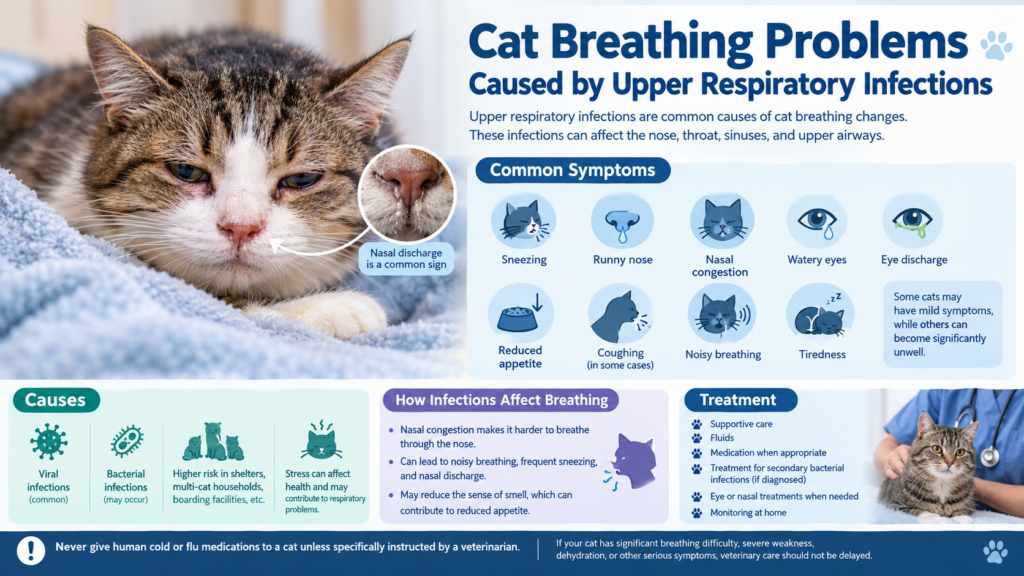
Upper respiratory infections are common causes of Cat Breathing changes. These infections can affect the nose, throat, sinuses, and upper airways.
Cats with respiratory infections may develop congestion that makes breathing sound different from normal.
Common Symptoms of a Cat Breathing Infection
A cat with an upper respiratory infection may show several symptoms, including:
- Sneezing
- Runny nose
- Nasal congestion
- Watery eyes
- Eye discharge
- Reduced appetite
- Coughing in some cases
- Noisy breathing
- Tiredness
Some cats may have mild symptoms, while others can become significantly unwell.
Causes of Respiratory Breath Problems
Upper respiratory infections can have different causes. Viral infections are common, and bacterial infections may also occur.
Cats living in shelters, multi-cat households, boarding facilities, or other environments with many cats may have greater exposure to infectious organisms.
Stress can also affect a cat’s overall health and may contribute to the development or worsening of some respiratory problems.
How Respiratory Infections Affect Cat Breathing
Nasal congestion can make it harder for a cat to breathe comfortably through its nose. This can lead to noisy breathing, frequent sneezing, and nasal discharge.
A congested cat may also have a reduced sense of smell. Since cats often rely on their sense of smell to become interested in food, congestion may contribute to reduced appetite.
Treatment for Cat Breathing Problems From Infections
Treatment depends on the underlying cause and severity of the infection.
A veterinarian may recommend:
- Supportive care
- Fluids
- Medication when appropriate
- Treatment for secondary bacterial infections when diagnosed
- Eye or nasal treatments when needed
- Monitoring at home
Never give human cold or flu medications to a cat unless specifically instructed by a veterinarian. Some human medications can be dangerous for cats.
If your cat has significant breathing difficulty, severe weakness, dehydration, or other serious symptoms, veterinary care should not be delayed.
Asthma and Cat Breathing Problems
Feline asthma is another important cause of Cat Breathing difficulties. Asthma involves inflammation and narrowing of the airways, which can make it harder for air to move normally.
Asthma can range from mild episodes to severe breathing difficulties.
What Is Feline Asthma?
Feline asthma is a condition involving inflammation of the lower airways. Some cats may experience occasional episodes, while others can have more persistent respiratory symptoms.
Environmental irritants may contribute to airway inflammation in susceptible cats.
Symptoms of Asthma in Cats
Common signs can include:
- Coughing
- Wheezing
- Rapid breathing
- Difficulty breathing
- Increased breathing effort
- Low activity during episodes
- Crouching or extending the neck while breathing
Some owners may mistake coughing for a hairball problem. If a cat repeatedly coughs without producing a hairball, a veterinary examination is appropriate.
What Can Trigger Cat Breathing Problems?
Potential environmental irritants include:
- Cigarette smoke
- Dust
- Strong perfumes
- Air fresheners
- Aerosol sprays
- Certain cleaning products
- Dusty litter
Not every cat reacts to the same triggers, so identifying possible environmental factors can be helpful.
Treatment for Cat Breathing and Asthma
A veterinarian must diagnose asthma and determine the appropriate treatment. Depending on the individual cat, treatment may involve medications designed to reduce airway inflammation or improve airflow.
Some cats may benefit from inhaled medications administered through a veterinary-recommended device.
Owners should follow veterinary instructions carefully and should not start human asthma medication without professional guidance.
Heart Disease and Cat Breathing Difficulties
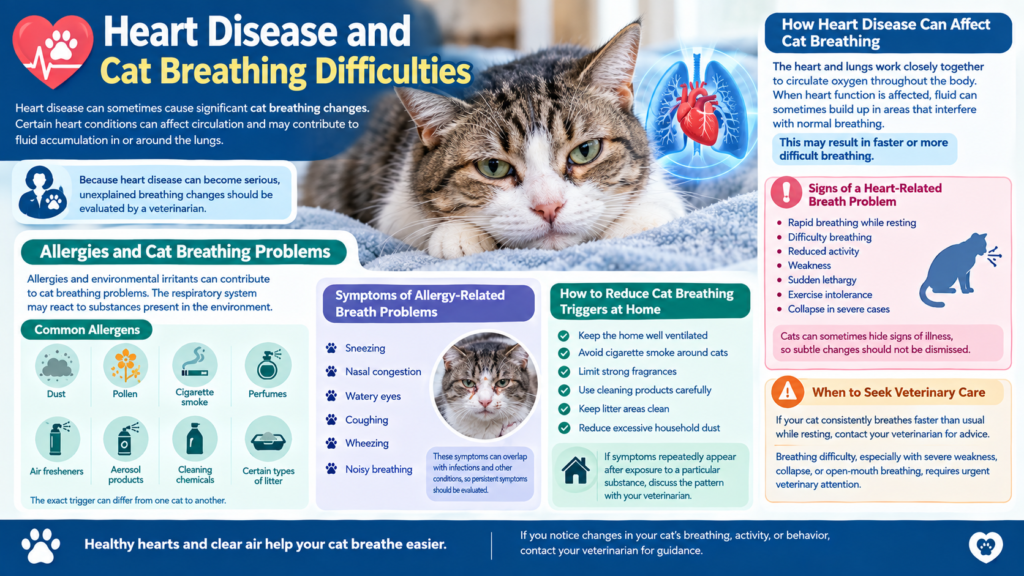
Heart disease can sometimes cause significant Cat Breathing changes. Certain heart conditions can affect circulation and may contribute to fluid accumulation in or around the lungs.
Because heart disease can become serious, unexplained breathing changes should be evaluated by a veterinarian.
How Heart Disease Can Affect Cat Breathing
The heart and lungs work closely together to circulate oxygen throughout the body. When heart function is affected, fluid can sometimes build up in areas that interfere with normal breathing.
This may result in faster or more difficult breathing.
Signs of a Heart-Related Breath Problem
Possible warning signs include:
- Rapid breathing while resting
- Difficulty breathing
- Reduced activity
- Weakness
- Sudden lethargy
- Exercise intolerance
- Collapse in severe cases
Cats can sometimes hide signs of illness, so subtle changes in activity or breathing should not automatically be dismissed.
When Cat Breathing Changes Need Veterinary Care
If your cat consistently breathes faster than usual while resting, contact your veterinarian for advice.
Breathing difficulty, especially when accompanied by severe weakness, collapse, or open-mouth breathing, requires urgent veterinary attention.
Allergies and Cat Breathing Problems
Allergies and environmental irritants can contribute to Cat Breathing problems in some cats. The respiratory system may react to substances present in the environment.
Common Allergens That Can Affect Cat Breathing
Potential irritants include:
- Dust
- Pollen
- Cigarette smoke
- Perfumes
- Air fresheners
- Aerosol products
- Cleaning chemicals
- Certain types of litter
The exact trigger can differ from one cat to another.
Symptoms of Allergy-Related Breath Problems
Depending on the cause, a cat may develop:
- Sneezing
- Nasal congestion
- Watery eyes
- Coughing
- Wheezing
- Noisy breathing
These symptoms can overlap with infections and other respiratory conditions, so persistent symptoms should be evaluated rather than automatically assumed to be allergies.
How to Reduce Cat Breathing Triggers at Home
You can reduce potential respiratory irritants by:
- Keeping the home well ventilated
- Avoiding cigarette smoke around cats
- Limiting strong fragrances
- Using cleaning products carefully
- Keeping litter areas clean
- Reducing excessive household dust
If you notice that breathing symptoms repeatedly appear after exposure to a particular substance, discuss the pattern with your veterinarian.
Foreign Objects and Sudden Cat Breathing Problems
A foreign object affecting the airway can cause a sudden and potentially serious Breath Problem.
Cats can sometimes inhale or accidentally get small objects or materials into their airways. Sudden breathing difficulty should always be taken seriously.
How Foreign Objects Can Cause a Breath Problem
An obstruction may interfere with the movement of air. The severity depends on the location and size of the obstruction.
A cat with a significant airway obstruction may suddenly appear distressed and struggle to breathe.
Warning Signs of a Cat Breathing Emergency
Emergency warning signs may include:
- Sudden severe breathing difficulty
- Gasping
- Open-mouth breathing
- Extreme distress
- Blue, gray, or very pale gums
- Collapse
- Severe weakness
These signs require immediate veterinary attention.
Pneumonia and Serious Cat Breathing Problems
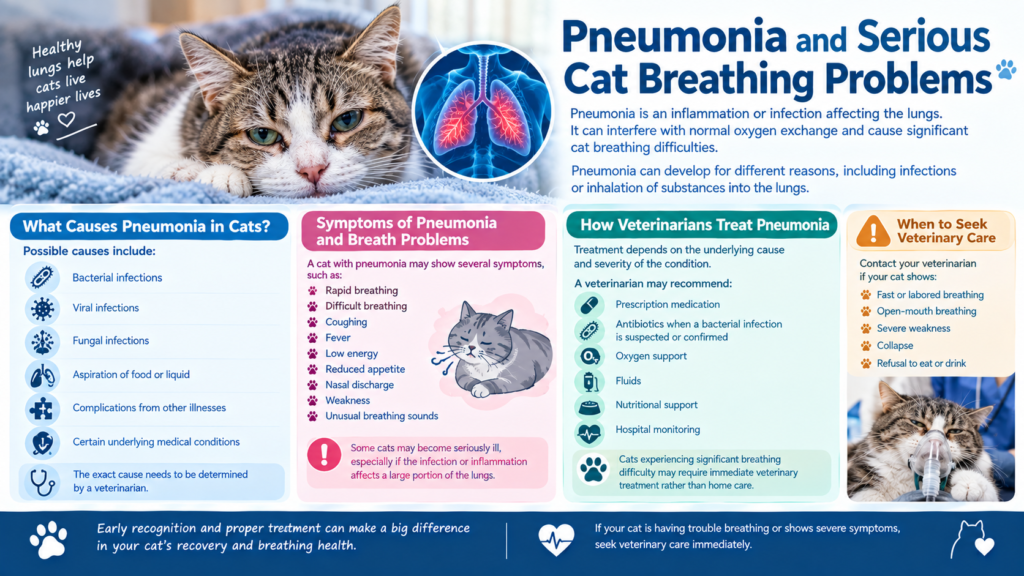
Pneumonia is an inflammation or infection affecting the lungs. It can interfere with normal oxygen exchange and cause significant Cat Breathing difficulties.
Pneumonia can develop for different reasons, including infections or inhalation of substances into the lungs.
What Causes Pneumonia in Cats?
Possible causes include:
- Bacterial infections
- Viral infections
- Fungal infections
- Aspiration of food or liquid
- Complications from other illnesses
- Certain underlying medical conditions
The exact cause needs to be determined by a veterinarian.
Symptoms of Pneumonia and Breath Problems
A cat with pneumonia may show several symptoms, such as:
- Rapid breathing
- Difficult breathing
- Coughing
- Fever
- Low energy
- Reduced appetite
- Nasal discharge
- Weakness
- Unusual breathing sounds
Some cats may become seriously ill, especially if the infection or inflammation affects a large portion of the lungs.
How Veterinarians Treat Pneumonia
Treatment depends on the underlying cause and severity of the condition.
A veterinarian may recommend:
- Prescription medication
- Antibiotics when a bacterial infection is suspected or confirmed
- Oxygen support
- Fluids
- Nutritional support
- Hospital monitoring
Cats experiencing significant breathing difficulty may require immediate veterinary treatment rather than home care.
Nasal and Airway Problems Affecting Cat Breathing
Problems affecting the nose, throat, or upper airway can change the way a cat breathes. Some conditions cause congestion, while others can physically interfere with normal airflow.
Common Nasal Causes of Cat Breathing Problems
Potential causes include:
- Nasal inflammation
- Chronic respiratory disease
- Nasal polyps
- Foreign material
- Growths or masses
- Long-term congestion
A cat with a nasal problem may breathe noisily or have difficulty moving air through the nose.
Symptoms to Watch For
Possible signs include:
- Snoring
- Noisy breathing
- Frequent sneezing
- Persistent nasal discharge
- Nasal congestion
- Difficulty breathing through the nose
- Changes in voice or meow
- Reduced sense of smell
A small amount of occasional sneezing may not necessarily indicate a serious problem. However, persistent symptoms deserve veterinary attention.
Diagnosis and Treatment of Cat Breathing Problems
A veterinarian may examine the mouth, nose, throat, lungs, and overall health of the cat.
Depending on the symptoms, diagnostic testing may include imaging or other procedures.
Treatment depends entirely on the underlying cause. For example, an infection may require a different approach from a structural airway problem.
Heat, Stress, and Other Temporary Cat Breathing Changes
Not every change in Cat Breathing means that a cat has a disease. Exercise, stress, fear, and heat can temporarily increase breathing.
However, owners should know the difference between a temporary change and a serious Breath Problem.
Cat Breathing After Exercise
A cat may breathe faster after running, jumping, or playing.
For example, a cat that has just chased a toy around the house may temporarily have a faster breathing rate.
After the cat stops exercising and rests, breathing should gradually become more comfortable.
If rapid breathing continues for an unusually long period or appears excessive, contact a veterinarian.
Stress and Cat Breathing
Cats may breathe faster when they are frightened or stressed.
Common stressful situations include:
- Traveling
- Veterinary visits
- Loud noises
- New animals
- Changes in the household
- Unfamiliar environments
Once the stressful situation ends, breathing should generally settle as the cat becomes calm.
Heat and Rapid Cat Breathing
Hot environments can also affect breathing. Cats exposed to excessive heat can become dangerously overheated.
Possible signs of overheating include:
- Rapid breathing
- Excessive panting
- Weakness
- Restlessness
- Drooling
- Vomiting
- Collapse
Cats with signs of serious overheating need urgent veterinary attention.
When Temporary Cat Breathing Becomes a Breath Problem
Temporary rapid breathing is more concerning when:
- It occurs while the cat is resting
- It does not improve after the cat becomes calm
- The cat is breathing with its mouth open
- Breathing appears difficult
- The cat becomes weak
- The gums appear pale, blue, or gray
- The cat collapses
These symptoms should not be ignored.
Cat Breathing Problems in Kittens and Older Cats
A cat’s age can influence the types of health conditions that may affect breathing.
Kittens can be vulnerable to respiratory infections, while older cats may develop conditions involving the heart, lungs, or other organs.
Cat Breathing Problems in Kittens
Kittens can develop respiratory infections that cause:
- Sneezing
- Nasal discharge
- Congestion
- Watery eyes
- Reduced appetite
- Low energy
- Noisy breathing
Very young kittens can become dehydrated or weak quickly when they are sick.
If a kitten has significant breathing difficulty, refuses food, becomes extremely weak, or develops other serious symptoms, veterinary attention is important.
Cat Breathing Problems in Senior Cats
Older cats may have a higher risk of certain chronic health conditions.
Potential causes of breathing changes can include:
- Heart disease
- Lung disease
- Chronic respiratory conditions
- Tumors or other growths
- Other age-related medical problems
A new change in breathing in a senior cat should be discussed with a veterinarian rather than simply being considered a normal part of aging.
Why Age Matters When Evaluating a Breath Problem
The same breathing symptom can have different possible causes depending on the cat’s age and health history.
This is why veterinary examination is important when breathing changes are persistent, unusual, or severe.
What to Do if a Cat Has Sudden Breathing Difficulty
Keep your cat as calm as possible and seek emergency veterinary care.
Avoid forcing food, water, or medication into a cat that is struggling to breathe. Do not delay professional care while trying unproven home treatments.
If an airway obstruction is suspected, a veterinarian can determine the safest way to assess and treat the problem.
Part 1 Summary: Understanding Cat Breathing Problems
Understanding your cat’s normal breathing pattern makes it easier to recognize changes. Cat Breathing should generally be quiet, smooth, and comfortable when the cat is resting.
Respiratory infections, asthma, heart disease, allergies, and foreign objects are among the conditions that can cause a Breath Problem.
Not every change in breathing is an emergency. Exercise, stress, excitement, and heat can temporarily increase breathing. However, persistent rapid breathing, open-mouth breathing, severe wheezing, gasping, or signs of distress should be taken seriously.
In Part 2, we will cover pneumonia, nasal and airway problems, heat and stress-related breathing changes, breathing problems in kittens and older cats, emergency warning signs, diagnosis, treatment, home monitoring, and frequently asked questions about Cat Breathing.
Cat Breathing Symptoms: When Should You Worry?
One of the most important things for cat owners to understand is when a breathing change requires immediate attention.
Mild Cat Breathing Changes
Some temporary changes may occur after:
- Exercise
- Playing
- Stress
- Fear
- Excitement
- Exposure to heat
The breathing should generally improve once the cat rests and becomes comfortable.
Serious Breath Problem Warning Signs
Contact a veterinarian promptly if your cat develops concerning symptoms such as:
- Persistent rapid breathing
- Difficulty breathing
- Repeated coughing
- Significant wheezing
- Noisy breathing
- Severe nasal congestion
- Weakness
- Reduced activity
- Loss of appetite combined with respiratory symptoms
Cat Breathing Emergency Signs
Some symptoms indicate a potential emergency.
These include:
- Open-mouth breathing
- Gasping
- Severe breathing difficulty
- Blue, gray, or very pale gums
- Collapse
- Extreme weakness
- Severe distress
Cats normally breathe through their noses. Open-mouth breathing in a cat should therefore be treated as a serious warning sign, particularly when the cat is not simply panting briefly after intense activity.
If your cat appears unable to breathe comfortably, seek emergency veterinary care immediately.
How Veterinarians Diagnose Cat Breathing Problems
Finding the underlying cause is important because different conditions require different treatments.
Physical Examination
A veterinarian may:
- Listen to the heart and lungs
- Check the breathing pattern
- Examine the nose and mouth
- Check the gums
- Measure temperature
- Evaluate overall condition
The veterinarian may also ask when the breathing problem started and whether it has become better or worse.
Diagnostic Tests for a Breath Problem
Depending on the symptoms, a veterinarian may recommend:
- Chest X-rays
- Blood tests
- Oxygen assessment
- Heart evaluation
- Airway examination
- Other imaging or laboratory tests
Not every cat needs every test. The appropriate diagnostic approach depends on the individual symptoms and examination findings.
Why Identifying the Cause of Cat Breathing Problems Matters
Breathing difficulty is a symptom rather than a single disease.
For example, asthma, pneumonia, heart disease, infection, and airway obstruction can all affect breathing but require different approaches.
Correct diagnosis allows the veterinarian to choose an appropriate treatment plan.
Treatment for Cat Breathing and Breath Problems
Treatment depends on what is causing the breathing difficulty.
Medication for Cat Breathing Problems
Depending on the diagnosis, a veterinarian may prescribe medications such as:
- Antibiotics for certain bacterial infections
- Anti-inflammatory medications
- Asthma medications
- Other prescription treatments
Medication should only be given according to veterinary instructions.
Never assume that a medication used by a person or another pet is safe for your cat.
Supportive Treatment
Cats with serious respiratory problems may need supportive care, including:
- Oxygen therapy
- Fluids
- Nutritional support
- Hospital monitoring
- Treatment of the underlying condition
The goal is to stabilize breathing while addressing the cause of the problem.
Home Care After Veterinary Treatment
If your veterinarian allows your cat to recover at home:
- Give medications exactly as prescribed.
- Keep your cat in a quiet environment.
- Provide easy access to fresh water.
- Avoid smoke and strong fragrances.
- Monitor appetite and activity.
- Watch for changes in breathing.
- Follow all recommended follow-up instructions.
If symptoms become worse, contact your veterinarian promptly.
How to Monitor Cat Breathing at Home
Monitoring your cat’s breathing can help you notice changes early.
How to Count a Cat’s Resting Breaths
Choose a time when your cat is relaxed or sleeping.
Watch the chest rise and fall.
Count each complete rise and fall as one breath.
Count for 30 seconds.
Multiply the number by two to estimate breaths per minute.
Record the result.
Avoid counting immediately after exercise, playing, or a stressful event.
Keeping a Cat Breathing Log
A simple record can include:
- Date
- Resting breathing rate
- Coughing
- Wheezing
- Nasal discharge
- Appetite
- Activity level
- Medication
- Other unusual symptoms
This information can be useful when discussing your cat’s condition with a veterinarian.
Why Monitoring Cat Breathing Can Help
Regular observation helps owners become familiar with their cat’s normal pattern.
If the breathing pattern changes consistently, you may be able to identify the change sooner and provide your veterinarian with useful information.
Home monitoring should not replace professional veterinary diagnosis.
10 Common Causes of Cat Breathing Problems at a Glance
| Cause | Common Symptoms | General Approach |
| Respiratory infection | Sneezing, congestion, discharge | Veterinary assessment and appropriate treatment |
| Asthma | Coughing, wheezing, breathing difficulty | Veterinary diagnosis and prescribed treatment |
| Heart disease | Rapid breathing, weakness | Veterinary evaluation and treatment |
| Allergies or irritants | Sneezing, coughing, congestion | Identify triggers and veterinary guidance |
| Foreign object | Sudden breathing difficulty | Emergency veterinary assessment |
| Pneumonia | Coughing, rapid breathing, weakness | Veterinary treatment and supportive care |
| Nasal disease | Noisy breathing, discharge | Diagnosis and cause-specific treatment |
| Heat | Rapid breathing, panting, weakness | Cooling and urgent care when severe |
| Stress | Temporary rapid breathing | Remove stressor and monitor recovery |
| Other lung or airway disease | Various respiratory symptoms | Veterinary examination and testing |
Frequently Asked Questions About Cat Breathing
What Is a Normal Cat Breathing Rate?
A cat’s resting breathing rate can vary. It is best to establish your individual cat’s normal resting pattern and watch for persistent changes rather than relying on one isolated measurement.
How Can I Tell If My Cat Has a Breath Problem?
Signs may include persistent rapid breathing, coughing, wheezing, noisy breathing, increased breathing effort, or open-mouth breathing.
If breathing appears difficult, seek veterinary advice promptly.
Why Is My Cat Breathing Fast While Resting?
Fast breathing while resting can have several possible causes, including respiratory disease, asthma, heart problems, pain, stress, heat, and other medical conditions.
Persistent rapid breathing should be evaluated by a veterinarian.
Is Open-Mouth Breathing Normal in Cats?
Open-mouth breathing can be a serious warning sign in cats, particularly if it occurs while the cat is resting or appears distressed.
If your cat is struggling to breathe, seek emergency veterinary care.
Why Is My Cat Making a Strange Noise When Breathing?
Noisy breathing can be associated with congestion, inflammation, airway problems, respiratory infections, or other conditions.
Persistent or worsening noisy breathing should be checked by a veterinarian.
Can Allergies Cause Cat Breathing Problems?
Yes, environmental irritants and allergies can contribute to respiratory symptoms in some cats. However, similar symptoms can occur with infections and other conditions, so persistent symptoms should be evaluated.
What Does Cat Asthma Breathing Look Like?
A cat experiencing asthma may cough, wheeze, breathe rapidly, or show increased effort when breathing. Some cats may crouch or extend their neck during an episode.
Veterinary evaluation is needed to determine the cause and appropriate treatment.
When Should I Take My Cat to a Veterinarian for a Breath Problem?
Veterinary attention is appropriate for persistent or unusual breathing changes, especially when accompanied by coughing, wheezing, weakness, appetite loss, or other symptoms.
Severe breathing difficulty, gasping, open-mouth breathing, blue or gray gums, or collapse should be treated as an emergency.
Can Stress Cause Rapid Cat Breathing?
Stress and fear can temporarily increase breathing. Once the cat becomes calm, breathing should generally settle.
If rapid breathing continues after the stressful situation ends, another cause should be considered and veterinary advice may be appropriate.
How Can I Monitor My Cat’s Breathing at Home?
Observe your cat when relaxed or sleeping and count chest movements for a set period. Record the results and note any coughing, wheezing, discharge, appetite changes, or reduced activity.
If you notice a persistent change, share your observations with your veterinarian.
Conclusion: Understanding Cat Breathing and Breath Problems
Understanding Cat Breathing can help owners recognize changes before they become more serious. Cats can experience breathing difficulties because of respiratory infections, asthma, heart disease, pneumonia, allergies, airway problems, heat, stress, and other medical conditions.
A temporary increase in breathing after exercise or stress may resolve once the cat becomes calm. However, persistent rapid breathing or signs such as wheezing, severe breathing effort, open-mouth breathing, gasping, blue or gray gums, or collapse should never be ignored.
A Breath Problem can have many different causes, so the correct diagnosis is important. Avoid giving human medications or attempting unproven treatments at home. When breathing appears difficult or abnormal, contacting a veterinarian is the safest approach.
Regularly observing your cat’s resting breathing pattern can also help you recognize changes early and provide useful information during a veterinary examination.